Business Contract Risk Allocation Guide: Indemnity Clauses, Liability Caps, Insurance Requirements, and Dispute Prevention
Business contracts define the responsibilities, financial obligations, performance standards, and legal remedies that apply when organizations work together. Whether an agreement covers technology implementation, equipment supply, consulting, distribution, construction, logistics, or outsourced operations, its terms determine how the parties manage uncertainty and respond when something goes wrong.
Contract risk allocation is the process of deciding which party is responsible for particular losses, failures, claims, delays, and legal obligations. A well-structured agreement does not simply assign responsibility to one side. It considers which party can best prevent a risk, control its consequences, obtain appropriate insurance, and manage the resulting financial exposure.
Four provisions often play a central role:
Indemnity clauses: Establish circumstances in which one party must compensate or protect another against specified claims or losses.
Liability caps: Set limits on certain categories of contractual liability, subject to the wording and applicable law.
Insurance requirements: Specify the types and amounts of insurance that parties must maintain.
Dispute prevention provisions: Clarify expectations, reporting obligations, escalation processes, and procedures for resolving disagreements.
These provisions should work together. A contract may require substantial insurance while also imposing a liability cap that limits recovery. An indemnity may cover certain third-party claims but fall outside the cap—or be expressly subject to it. Understanding these interactions is essential before an agreement is signed.
What Is Business Contract Risk Allocation?
Contract risk allocation is the division of responsibilities and potential losses between parties to a commercial agreement. It translates operational, financial, legal, and insurance risks into enforceable contractual terms, to the extent permitted by applicable law.
For example, a manufacturer engaging a logistics provider may need to address cargo damage, delivery delays, data handling, employee conduct, and third-party injury. Each risk requires a clear assessment of who controls the relevant activity, what standard of performance applies, and how losses will be handled.
Effective allocation typically considers five questions:
Who controls the risk? Identify the party responsible for the activity that could cause the loss.
Who can prevent or reduce it? Determine which party can most effectively implement safeguards.
Who bears the financial consequences? Specify responsibility for direct losses, third-party claims, and other defined exposure.
What protection is available? Review insurance, indemnities, contractual remedies, and financial capacity.
How will disagreements be resolved? Establish notice periods, evidence requirements, escalation procedures, and dispute resolution mechanisms.
The objective is to create a commercially workable agreement in which obligations are understandable, risks are proportionate, and remedies are consistent with the transaction.
Why Contract Risk Allocation Matters
Poorly drafted risk provisions can create uncertainty even when both parties initially intend to cooperate. A disagreement may arise because the agreement uses vague language, assigns overlapping responsibilities, or treats insurance as if it automatically guarantees payment for every contractual loss.
A structured approach helps organizations:
Clarify responsibility for performance failures and third-party claims.
Reduce ambiguity about compensation, defense obligations, and recovery rights.
Align insurance arrangements with the risks assumed under the agreement.
Support more consistent contract negotiation and approval.
Improve financial forecasting by identifying significant potential liabilities.
Reduce avoidable disputes caused by unclear notice, documentation, or escalation requirements.
Establish an auditable record of agreed responsibilities and exceptions.
Risk allocation should reflect the actual transaction. A routine purchase agreement may require relatively simple provisions, while a multinational technology agreement or major construction contract may need detailed treatment of intellectual property, data security, delay, bodily injury, regulatory obligations, and business interruption.
Indemnity Clauses: Scope, Triggers, and Limitations
An indemnity clause establishes circumstances in which one party must compensate another for specified losses or claims. Its practical effect depends on the wording, the covered events, applicable law, and the relationship between the indemnity and other contractual provisions.
Common types of indemnity
Third-party claim indemnity: May cover claims brought by customers, employees, regulators, or other external parties when the claims fall within the agreed scope.
Intellectual property indemnity: May address allegations that a product, software application, design, or other deliverable infringes another party's intellectual property rights.
Bodily injury and property damage indemnity: May allocate responsibility for defined injury or physical damage arising from a party's activities, negligence, or misconduct.
Tax-related indemnity: May address specified tax liabilities or obligations connected with a transaction, subject to applicable tax law and the agreement's terms.
Breach-related indemnity: May provide compensation for particular losses arising from a defined contractual breach. Its relationship with ordinary damages provisions should be stated clearly to avoid uncertainty.
Essential drafting elements
A well-considered indemnity provision should address:
Covered events: Identify the actions, omissions, breaches, or claims that trigger the obligation.
Covered losses: Define whether the provision includes damages, settlements, judgments, reasonable legal expenses, investigation expenses, or other specified amounts.
Causation: Clarify the required connection between the responsible party's conduct and the loss.
Notice requirements: Specify how promptly a claim must be reported and what information must be provided.
Defense control: Explain who may select counsel, direct the defense, and approve settlements.
Cooperation: Establish requirements for sharing documents, preserving evidence, and assisting with claim handling.
Settlement restrictions: Address settlements that impose admissions, continuing obligations, or payments on the other party.
Exceptions: Consider the treatment of losses caused by the protected party's own conduct, depending on the transaction and applicable law.
Indemnity wording should avoid assuming that every claim is covered simply because it relates to the agreement. A narrowly defined clause may exclude consequential losses or certain categories of claims. A broader clause may create exposure that is difficult to quantify.
Practical example: A software implementation agreement may require the provider to address third-party intellectual property claims relating to its original deliverables. The contract should also specify exclusions, such as claims arising from unauthorized modifications or combinations with materials supplied by the customer, where appropriate and legally enforceable.
Liability Caps: Setting Defensible Limits
A liability cap limits the amount a party may be required to pay for specified liabilities. Caps are commonly negotiated by reference to contract value, fees paid or payable during a defined period, insurance limits, or a separately negotiated amount.
A cap is not automatically applicable to every claim. Its effect depends on the exact language, the structure of the agreement, and applicable law.
Common cap structures
Fixed monetary cap: Establishes a stated maximum amount for defined liabilities.
Contract-value cap: Links the maximum exposure to the agreement's total value or a specified percentage of that value.
Fees-based cap: Uses fees paid or payable over a defined period as the calculation basis. The agreement should clarify the relevant period and treatment of renewals or changes.
Separate or enhanced cap: Establishes a higher limit for specified risks, such as confidentiality breaches, data security incidents, or intellectual property claims.
Excluded liabilities: Identifies categories that do not benefit from a particular cap, where legally permissible. These may include certain fraud, willful misconduct, or other liabilities depending on the governing law and negotiation.
How to evaluate a liability cap
A sensible cap should consider the size and duration of the contract, potential loss severity, insurance availability, each party's financial position, and the risks under its control.
For instance, a contract worth ₹50 lakh may involve a data incident with consequences substantially greater than the agreement's value. A cap tied solely to annual fees may therefore provide inadequate protection for one party. A separate cap, tailored insurance requirement, or carefully defined allocation of data-related exposure may be more appropriate.
The agreement should also clarify:
Whether the cap applies per claim, per event, or in aggregate.
Whether related claims are treated as one event.
Whether legal expenses and defense costs count toward the cap.
Whether indemnity obligations are inside or outside the cap.
Whether insurance proceeds affect the cap calculation.
Whether multiple agreements share a single liability limit.
Whether the cap changes after renewal, an extension, or a major scope change.
Avoid assuming that a contractual cap will always be enforceable. Courts and applicable statutes may restrict certain exclusions or limitations, particularly where mandatory legal protections apply.
Insurance Requirements: Connecting Coverage to Contractual Exposure
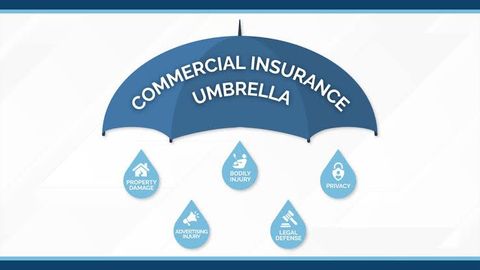
Insurance can provide financial protection for specified losses, but it does not replace careful contract drafting. Coverage depends on the policy wording, exclusions, limits, deductibles, reporting conditions, and facts of the claim.
Contractual insurance requirements should therefore be matched to the actual risks and to the liabilities each party accepts.
Common types of business insurance
Commercial general liability: May address certain third-party bodily injury, property damage, and related claims, subject to policy terms.
Professional indemnity or errors and omissions insurance: May respond to specified claims arising from professional negligence, errors, or failures in professional activities.
Cyber insurance: May address certain cyber incidents, privacy events, data restoration expenses, and related liabilities depending on the policy.
Product liability insurance: May cover specified claims associated with injury or damage caused by products.
Commercial property insurance: May protect insured physical assets against covered events.
Workers' compensation or employer-related coverage: Requirements vary by jurisdiction and may be governed by mandatory law.
Directors and officers insurance: May address certain claims against directors and officers arising from their managerial roles, subject to policy provisions.
What an insurance clause should specify
A carefully drafted clause may identify:
Required policy types and minimum limits.
Relevant deductibles or self-insured retentions.
Whether coverage must be maintained during performance and for a period afterward.
Requirements for evidence of coverage and renewal documentation.
Notice procedures for cancellation or material changes, to the extent available under the policy and applicable law.
Whether additional-insured status is required and available for the relevant coverage.
Whether primary and non-contributory wording is required and obtainable.
Whether subcontractors must maintain comparable coverage.
The process for reporting incidents and preserving claim records.
A certificate of insurance is evidence of certain insurance information, but it generally does not amend the policy or independently establish that a particular claim is covered. Organizations should review relevant endorsements and policy provisions when the risk justifies it.
Aligning Indemnities, Liability Caps, and Insurance
The greatest drafting problems often arise not within individual clauses but between them. A contract may impose a broad indemnity, a low liability cap, and an insurance requirement that does not cover the indemnified risk.
Consider the following alignment checks:
| Contract element | Key question |
|---|---|
| Indemnity | Which claims and losses must be addressed? |
| Liability cap | Does the cap apply to the indemnity, and are any separate limits needed? |
| Insurance | Does the actual policy plausibly respond to the allocated exposure? |
| Defense provisions | Who manages the claim, and who pays defense expenses? |
| Exclusions | Are important risks excluded from both the cap and available insurance? |
| Remedies | Do service credits, liquidated damages, and ordinary damages interact with the cap? |
Organizations should create a contract risk matrix for material agreements. The matrix can record each significant risk, the party responsible, the relevant clause, the insurance arrangement, the applicable cap, and any unresolved gap.
For example, a data processing agreement may allocate responsibility for security failures to the party that controls the relevant systems. The contract may establish security standards and incident notification deadlines, while a separate cap applies to specified data-related claims. Cyber insurance may provide additional protection, but its scope must be assessed independently rather than assumed from the contract alone.
Dispute Prevention: Reducing Ambiguity Before Signing
Dispute prevention begins before a disagreement develops. Clear drafting, operational accountability, consistent documentation, and timely communication can reduce uncertainty and help parties resolve problems earlier.
Define deliverables and acceptance criteria
Describe the expected outputs, specifications, milestones, testing requirements, and acceptance process. If acceptance can be rejected, explain the grounds for rejection and the time allowed for correction.
Establish notice and cure procedures
Specify how a party must notify the other about a breach, defect, delay, or claim. Include the required contents of the notice, the method of delivery, and the period for remedying a breach when appropriate.
Document changes to scope
Use a formal change-control process for material changes to pricing, timing, technical requirements, staffing, or responsibilities. Identify who can approve changes and whether revised risk provisions or insurance arrangements are required.
Create an escalation process
A dispute clause may require operational representatives to discuss the issue first, followed by senior management if the issue remains unresolved. The agreement should set realistic timelines and identify the next step if escalation does not produce an agreement.
Choose a suitable dispute resolution mechanism
Depending on the transaction, parties may consider negotiation, mediation, arbitration, or court proceedings. The clause should address the applicable forum, governing law, location, language, and relevant procedural rules where appropriate.
Arbitration is not automatically faster or less expensive than litigation. The suitability of each mechanism depends on the parties, the dispute, enforceability considerations, and the legal framework.
Preserve relevant records
Maintain signed agreements, approved amendments, notices, meeting records, acceptance documentation, insurance evidence, incident reports, and correspondence. Good records can help establish what was agreed, what happened, and whether contractual procedures were followed.
Contract Risk Allocation Across Jurisdictions
International and domestic agreements may be subject to different rules governing indemnity, damages, insurance, dispute resolution, and contractual enforceability. A clause that is customary in one jurisdiction may be ineffective or interpreted differently in another.
India
For Indian commercial agreements, the Indian Contract Act, 1872 contains provisions relevant to indemnity and contractual obligations, including Sections 124 and 125 concerning contracts of indemnity and the rights of an indemnity-holder in specified circumstances. The precise application depends on the agreement, facts, and relevant legal interpretation.
Organizations should also examine applicable sector-specific requirements, mandatory insurance rules, data protection obligations, and any statutory restrictions relevant to the transaction.
United States
In the United States, contract law often depends on state law, the type of agreement, and applicable statutes. Some states restrict particular indemnity provisions, especially in specified construction or other regulated contracts. Insurance requirements and enforceability of liability limitations can also vary.
United Kingdom
In the United Kingdom, enforceability of exclusions and limitations can depend on the governing legal framework, contract type, wording, and relevant statutory controls. Certain terms may be subject to reasonableness or other legal tests.
Cross-border agreements
International contracts should clearly identify governing law and dispute resolution arrangements. Parties should also assess whether judgments or arbitral awards are likely to be recognized and enforced where assets are located.
This section is a general overview, not a complete statement of any jurisdiction's law. Legal review is important where the agreement involves significant exposure, regulated activities, cross-border operations, or mandatory statutory protections.
Tools and Resources for Contract Risk Management
Organizations can use structured workflows and technology to improve consistency across contract preparation, approval, and monitoring.
Contract lifecycle management platforms: Help maintain a central repository of agreements, track versions, manage approvals, and monitor renewal dates.
Clause libraries and drafting standards: Provide approved language for indemnity, caps, insurance, confidentiality, and dispute resolution. Templates should be reviewed periodically and adapted to the transaction.
Risk registers: Record major contractual risks, responsible owners, mitigation measures, and unresolved exceptions.
Insurance tracking systems: Help monitor policy dates, coverage evidence, limits, and documentation requirements.
Legal review workflows: Route material deviations, unusual indemnities, uncapped liabilities, and non-standard dispute provisions to the appropriate reviewers.
Obligation calendars: Track deliverables, notice deadlines, reporting requirements, renewals, and other time-sensitive obligations.
Practical implementation checklist:
Identify the commercial purpose and operational scope of the agreement.
Map material risks to the parties that can manage them.
Review indemnity triggers, covered losses, exclusions, and claim procedures.
Confirm how liability caps interact with indemnities and other remedies.
Compare contractual exposure with actual insurance coverage.
Identify uncapped or inadequately protected risks.
Define deliverables, acceptance criteria, change control, and cure periods.
Select a dispute resolution process suitable for the transaction.
Record approved deviations and obtain required internal authorization.
Monitor obligations, insurance renewals, amendments, and emerging risks throughout the contract term.
Common Contract Risk Allocation Mistakes
Using broad indemnity wording without defined boundaries: Unclear terms can create disagreements about the events and losses covered.
Treating insurance limits as a liability cap: Policy limits and contractual liability limits are separate concepts and may not align.
Failing to clarify defense costs: The contract may leave uncertainty about who selects counsel, controls settlements, or pays expenses while a claim is pending.
Leaving exceptions undefined: Broad carve-outs from liability caps can undermine the intended allocation of risk.
Ignoring subcontractors: A party may assume responsibility for subcontractor actions without ensuring that the agreement and insurance arrangements address the resulting exposure.
Using the same template for every transaction: Different industries, transaction values, data types, and performance risks require different approaches.
Neglecting contract monitoring: A well-drafted agreement can still create problems if the parties miss notification deadlines, fail to maintain required insurance, or make undocumented changes.
Frequently Asked Questions
1. What is the difference between indemnity and a limitation of liability?
An indemnity establishes responsibility for specified claims or losses. A limitation of liability restricts the amount or categories of liability a party may face. Their interaction depends on the contract language and applicable law.
2. Should indemnity obligations always be excluded from a liability cap?
No. The appropriate treatment depends on the transaction, bargaining position, risk severity, available insurance, and legal requirements. Some agreements place indemnity obligations within the general cap, while others establish separate limits or specific exceptions.
3. Does a certificate of insurance prove that a contractual claim is covered?
Not necessarily. A certificate summarizes certain insurance information but generally does not alter policy terms. Coverage should be evaluated against the policy wording, endorsements, exclusions, limits, and facts of the claim.
4. What should a business do before accepting an uncapped liability clause?
Identify the exposure, determine which events trigger the clause, assess the potential financial consequences, review available insurance, and consider whether a negotiated cap or narrower exception is appropriate. Significant uncapped obligations should receive appropriate legal and risk review.
5. How often should a business review its contract risk provisions?
Review them before signing, when the scope or risk profile changes, during major renewals, and after significant incidents or changes in applicable law. High-risk agreements may need more frequent monitoring based on their obligations and exposure.
Conclusion
Business contract risk allocation is most effective when indemnity clauses, liability caps, insurance requirements, and dispute prevention procedures are designed as a coordinated framework. Each provision should reflect the risks involved, the parties' ability to control those risks, the financial protection available, and the remedies permitted by applicable law.
Organizations can strengthen their approach by defining covered losses, clarifying defense and notice procedures, checking the interaction between caps and indemnities, verifying insurance arrangements, and maintaining reliable contract records. Regular reviews and consistent approval processes help identify gaps before they become disputes.
The goal is not to eliminate every commercial risk. It is to allocate risk transparently, maintain proportionate protections, and establish practical procedures for handling unexpected events.

Related Post...