Child Custody Guide: Legal Processes, Parenting Plans, Court Information, and Practical Tips
Child custody determines how parents or other legally recognized caregivers share responsibility for a child's care and decision-making. In the United States, custody law is primarily governed by state law, so terminology, court procedures, required forms, and decision-making standards can differ significantly between jurisdictions.
Custody matters may arise during divorce, separation, parentage proceedings, or other family-law cases. Depending on the circumstances, a court may address legal decision-making, parenting time, visitation, child support, and related matters.
Why Child Custody Planning Matters
A clear custody arrangement can help parents understand their responsibilities and reduce uncertainty about day-to-day decisions.
Planning may address:
Where the child will live
How parenting time will be divided
Who makes major decisions
School and education decisions
Healthcare decisions
Holiday and vacation schedules
Transportation arrangements
Communication between parents
Childcare arrangements
Contact with extended family
Travel and relocation
Child support and related expenses
Courts generally consider the child's best interests when making custody or placement decisions. A review of state statutes by the U.S. Children's Bureau found that every state, the District of Columbia, and U.S. territories have laws identifying factors for best-interest determinations.
What Is Child Custody?
Child custody is commonly discussed in two broad categories: legal custody and physical custody, although terminology varies by state.
Legal custody
Legal custody generally concerns authority to make important decisions affecting the child, such as education, healthcare, and other major areas of upbringing.
Physical custody
Physical custody generally concerns where the child lives and how much parenting time each parent has.
Some jurisdictions use different terms, such as legal decision-making, residential responsibility, or parenting time. State law and the court's order determine the applicable terminology and rights.
Joint and Sole Custody
Depending on state law, courts may establish arrangements such as:
Joint legal custody
Both parents participate in major decisions concerning the child.
Sole legal custody
One parent has primary authority over specified major decisions.
Joint physical custody
The child spends substantial time with both parents according to the applicable schedule.
Primary physical custody
The child spends most of the scheduled residential time with one parent while maintaining parenting time with the other.
These labels do not necessarily mean the same thing in every state. For example, state statutes may define parenting time or physical custody using specific percentages or other legal standards.
Parenting Plans
A parenting plan is a written arrangement describing how parents will handle parenting responsibilities and time with the child.
A detailed plan may address:
Regular weekly schedules
Weekends
Holidays
School breaks
Birthdays
Summer vacations
Transportation
Pick-up and drop-off locations
Communication with the child
Healthcare decisions
Education
Extracurricular activities
Travel
Relocation
Emergency situations
Methods for resolving disagreements
A detailed schedule can reduce uncertainty because parents have a reference point for recurring situations.
Creating a Practical Parenting Schedule
A parenting schedule should reflect the child's age, school schedule, activities, transportation needs, and the parents' circumstances.
Parents may consider schedules such as:
Alternating weeks
2-2-3 schedules
2-2-5-5 schedules
Weekday/weekend arrangements
Primary-residence arrangements with defined parenting time
Customized schedules for school-year and summer periods
There is no universal schedule that works for every family. A court-approved schedule may also include specific requirements concerning exchanges, holidays, communication, or supervision.
Child Custody Court Process
The exact procedure depends on the state and the circumstances of the case. State and territory courts generally handle family-law matters rather than federal courts.
A custody case may generally involve:
1. Determining the appropriate court
The case usually needs to be filed in the jurisdiction authorized to handle the child's custody matter. Rules concerning the child's home state and jurisdiction can be particularly important in interstate cases. For example, Nevada uses a six-month home-state rule in many custody situations, subject to exceptions.
2. Filing the required documents
A parent may need to file a petition, complaint, or other custody documents depending on the state and circumstances.
3. Serving or notifying the other parent
Procedural rules generally require appropriate notice to the other party.
4. Temporary orders
Some cases involve temporary arrangements concerning parenting time, decision-making, support, or other issues while the case is pending.
5. Negotiation or mediation
Parents may reach an agreement without requiring the judge to decide every disputed issue. Some jurisdictions provide mediation or other dispute-resolution procedures.
6. Court hearings
If the parents cannot resolve the issues, the court may hold hearings and review evidence from the parties and other relevant sources.
7. Final custody order
The court may issue an order establishing custody, parenting time, decision-making responsibilities, and other applicable requirements.
Best Interests of the Child
The child's best interests are a central consideration in custody decisions.
State laws differ, but factors can include:
Child safety
Emotional and developmental needs
Each parent's ability to provide care
Stability
Existing relationships
School and community considerations
Each parent's involvement in the child's life
Ability to cooperate on parenting decisions
History of domestic violence or abuse where legally relevant
The child's preferences where state law permits consideration
The precise factors and their legal weight depend on the jurisdiction. The Children's Bureau's review confirms that best-interest statutes exist throughout the states and U.S. territories, but the individual criteria differ.
Child Custody and Child Support
Custody and child support are related but legally distinct issues.
A custody order may establish parenting time and decision-making responsibilities, while a child-support order addresses financial support for the child.
A state or tribal child-support agency may help establish, modify, or enforce child-support obligations. USAGov explains that a court ruling or another legal procedure can establish a child-support order.
Parents should therefore review the custody order and child-support order separately and understand the requirements of each.
Relocation and Travel
Moving with a child can create additional legal issues when a custody order is already in place.
Parents should review applicable requirements before:
Moving to another city
Moving to another state
Moving internationally
Changing the child's school
Making major travel arrangements
Some jurisdictions require advance notice or court approval for certain relocations. The applicable custody order and state law should be reviewed before making a significant move.
Evidence and Documentation
Parents involved in a contested custody matter may need organized records relevant to the issues before the court.
Potentially relevant records can include:
Existing custody orders
Parenting schedules
School records
Healthcare records
Communication records
Transportation records
Financial information
Important calendar entries
Relevant incident documentation
Records concerning compliance with court orders
Records should be accurate, factual, and preserved appropriately. Parents should avoid altering, selectively presenting, or misrepresenting evidence.
Communication Between Parents
Parent communication can become an important practical part of custody arrangements.
Helpful practices may include:
Keep communication focused on the child
Use clear and factual language
Confirm important schedule changes in writing
Avoid unnecessary personal conflict
Maintain reliable exchange information
Follow the existing court order
Document significant agreements
Use designated communication systems when required by the court
A parenting plan can establish specific communication expectations, including how parents exchange information about school, healthcare, activities, and emergencies.
Mediation and Alternative Dispute Resolution
Mediation can allow parents to work through disputed custody issues with the assistance of a neutral third party.
Potential discussion areas include:
Parenting schedules
Holidays
Decision-making
Transportation
School matters
Healthcare
Communication
Travel
Future changes
Whether mediation is appropriate depends on the circumstances. Cases involving safety concerns, domestic violence, coercion, or other serious issues may require different procedures or safeguards.
Modifying a Custody Order
A custody order may sometimes be modified when circumstances materially change or when the applicable legal standard for modification is satisfied.
Potential circumstances can include:
Major changes in a child's needs
Relocation
Changes in school arrangements
Changes in parental circumstances
Significant health considerations
Repeated problems with an existing schedule
Changes affecting child safety
The required legal standard and filing process vary by state. A parent should not assume that an informal agreement automatically changes an existing court order.
Enforcement of Custody Orders
A custody order is a legal order, and violations can create court-related consequences.
Potential issues include:
Missed parenting time
Failure to follow exchange arrangements
Unauthorized relocation
Interference with court-ordered communication
Failure to follow decision-making provisions
Parents should review the specific order and applicable enforcement procedures rather than relying on informal interpretations.
Recent Developments
Current custody practice continues to involve greater attention to detailed parenting plans, child-focused decision-making, court oversight, and alternative dispute-resolution mechanisms.
Digital communication and electronic records also play an increasing role in family-law matters. Parents may communicate through email, messaging applications, parenting platforms, and other electronic systems.
At the same time, courts continue to apply state-specific legal standards. There is no single nationwide custody procedure that replaces state family-law requirements. USAGov directs people to state and territory courts for information about local court systems.
Laws, Policies, and Court Information
Child custody is primarily governed by state law and state court procedures.
Important areas to review include:
State custody statutes
Family-court rules
Jurisdiction requirements
Filing procedures
Service and notice requirements
Parenting-plan requirements
Mediation rules
Temporary-order procedures
Best-interest factors
Relocation requirements
Child-support rules
Modification standards
Enforcement procedures
For interstate matters, jurisdiction can become particularly important. Parents should identify which state has authority over the custody proceeding before filing. Specific rules can vary considerably between jurisdictions.
Practical Child Custody Planning Checklist
Before filing or responding to a custody matter, consider:
Identify the appropriate court and jurisdiction
Review any existing custody or support orders
Understand the applicable best-interest factors
Prepare a realistic parenting schedule
Consider school and childcare arrangements
Address holidays and vacations
Plan transportation and exchanges
Address healthcare and education decisions
Consider travel and relocation provisions
Organize relevant documents
Maintain accurate communication records
Understand mediation requirements
Review child-support procedures separately
Follow all existing court orders
Obtain qualified legal guidance when the matter is complex
Tools and Resources
Useful resources include:
State and local family courts: Filing requirements, forms, hearing information, local rules, and case procedures.
USAGov: General information about U.S. courts and family-law resources.
Children's Bureau: State-by-state information concerning best-interest standards.
State or tribal child-support agencies: Assistance with establishing, modifying, and enforcing child-support orders.
Legal-aid organizations: USAGov provides information about locating legal assistance and family-law resources.
FAQs
What is child custody?
Child custody generally refers to legal authority and parenting arrangements concerning a child. Depending on state terminology, it can include decision-making authority and physical or residential arrangements.
What is a parenting plan?
A parenting plan is a written arrangement describing how parents will share parenting responsibilities and time with their child. It can address schedules, holidays, transportation, communication, education, healthcare, and other practical matters.
How does a court decide child custody?
Courts generally apply the applicable state's best-interest standard. The specific factors vary by state and may include safety, stability, parental involvement, the child's needs, and other legally defined considerations.
Can parents agree on custody without a trial?
In some jurisdictions, parents who agree on the relevant issues can submit their agreement for court approval. The exact procedure varies by state. Nevada, for example, provides a joint-petition process when parents agree on specified custody, parenting-time, support, and related matters.
Can a custody order be changed?
Potentially. A modification may be possible when the applicable legal requirements are met, but the required circumstances and procedures vary by state. Parents should review the existing order and applicable state law before making changes.
Conclusion
Child custody planning involves legal decisions, parenting schedules, communication, court procedures, and the practical needs of the child.
A well-structured parenting plan can clarify day-to-day responsibilities, while a clear understanding of legal custody, parenting time, support obligations, and court requirements can reduce uncertainty.
Because custody law is state-specific, parents should verify the applicable rules, forms, deadlines, and court procedures in their jurisdiction. When significant disputes, interstate issues, safety concerns, or complex legal questions are involved, appropriately qualified family-law guidance can help explain the relevant options.

Related Post...
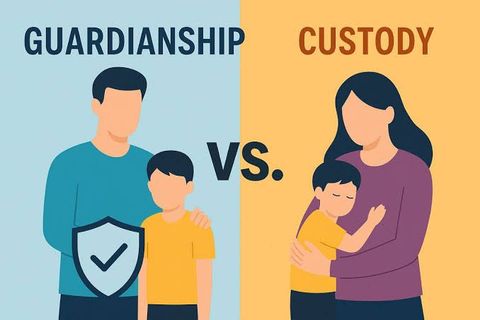
Child Custody Guide: Legal Processes, Parenting Plans, Court Information, and Practical Tips
Updated: September 24, 2026
Read More
Spousal Support Guide: Divorce Proceedings, Financial Factors, Legal Information, and Planning Insights
Updated: September 24, 2026
Read More