Enterprise Software Composition Analysis Guide: Open-Source Dependencies, License Obligations, Vulnerability Detection, and Code Governance
Modern enterprise applications depend on extensive collections of open-source libraries, commercial software components, development frameworks, and third-party packages. These dependencies help development teams build applications efficiently, but they also introduce security, licensing, maintenance, and governance responsibilities.
A single application may contain hundreds or thousands of direct and indirect dependencies. Developers may know which libraries they intentionally added, yet have limited visibility into the additional packages those libraries require. A vulnerability or restrictive license hidden several layers deep can therefore create a problem that is difficult to identify through manual code reviews alone.
Software Composition Analysis (SCA) is a set of practices and technologies used to discover software components, evaluate known vulnerabilities, identify license obligations, and monitor risks across the software development lifecycle.
For enterprises, SCA is an important part of application security and software supply chain risk management. It helps security teams, developers, legal departments, and compliance leaders understand what their applications contain and determine which issues require investigation or remediation.
An effective program goes beyond generating vulnerability reports. It establishes clear ownership, prioritizes findings according to business risk, documents license decisions, and integrates component governance into development and release processes.
What Is Software Composition Analysis?
Software Composition Analysis examines the components used to build or distribute an application. These components may include open-source packages, third-party libraries, frameworks, binaries, and transitive dependencies.
SCA tools typically inspect package manifests, lockfiles, source repositories, compiled artifacts, container images, and other software inputs. Depending on the tool, analysis may use package metadata, file fingerprints, binary signatures, vulnerability databases, and other identification methods.
The results can help organizations answer several questions:
Which third-party components are present in an application?
Which versions are installed or included in a release?
Are known vulnerabilities associated with those components?
Which licenses govern the components and their distribution?
Are unsupported or abandoned packages creating maintenance risks?
Where is a vulnerable component used across multiple applications?
Which teams are responsible for evaluating and resolving the findings?
SCA is related to, but distinct from, static application security testing (SAST) and dynamic application security testing (DAST).
SAST examines application code for potentially insecure coding patterns. DAST tests running applications for observable security weaknesses. SCA focuses on third-party components and their associated risks. These approaches complement each other within a broader application security program.
Why Enterprise SCA Matters
Reducing Software Supply Chain Exposure
Applications inherit some of their risk from the components they use. If a widely deployed dependency contains a serious vulnerability, multiple applications may be affected simultaneously.
SCA helps organizations identify exposure and understand where a component appears across repositories, products, and deployed environments.
Managing Open-Source License Obligations
Open-source software is governed by licenses that define conditions for use, modification, and redistribution. Some licenses impose notice, attribution, source-disclosure, or other obligations in particular circumstances.
SCA helps teams identify license information early enough to evaluate whether a component is compatible with the intended use of the software.
Improving Development Efficiency
Without centralized component information, teams may repeatedly investigate the same vulnerability or search manually for package versions across multiple projects.
An SCA inventory can support reusable remediation guidance, coordinated upgrades, and consistent approval procedures.
Supporting Enterprise Governance
Large organizations may have different engineering teams, business units, acquisition histories, and technology standards. A common SCA process creates a consistent method for documenting component risks and making decisions.
Strengthening Customer and Audit Readiness
Enterprise customers, regulators, and procurement teams may ask organizations to demonstrate how software components are identified, maintained, and assessed. Component inventories, vulnerability reports, and documented remediation decisions can support those reviews.
SCA does not automatically establish regulatory compliance or guarantee that an application is secure. Its effectiveness depends on coverage, data quality, remediation practices, and the controls surrounding the development lifecycle.
Understanding Open-Source and Third-Party Dependencies
A software dependency is a component that an application relies on to perform some function. Dependencies can be declared directly by a development team or introduced through another package.
Direct Dependencies
Direct dependencies are components explicitly selected by developers and recorded in a project manifest or package configuration.
Examples include a web framework, database connector, authentication library, or data-processing package.
Because development teams select these components directly, they can usually identify the business or technical reason for their inclusion.
Transitive Dependencies
Transitive dependencies are packages required by other dependencies. A development team might install one framework that automatically introduces several additional libraries.
These indirect packages can create hidden security or licensing exposure. A team may not realize that a vulnerable component is included until a dependency tree or software inventory is examined.
Development and Runtime Dependencies
Development dependencies support activities such as testing, compiling, linting, and packaging. Runtime dependencies are required when an application operates.
The distinction matters because exposure depends on where and how a component is used. A vulnerable package used only during development may present a different risk from a vulnerable library exposed within a production application.
However, development-only dependencies should not automatically be treated as harmless. Build systems and developer environments can also be targeted, and some packages may be included in the final artifact unexpectedly.
Dependency Version Management
Applications may use exact package versions, version ranges, lockfiles, or platform-specific dependency resolution.
Reproducible dependency management helps teams determine what was actually installed and deployed. Without reliable version records, vulnerability analysis may produce incomplete or misleading results.
Vulnerability Detection and Risk Prioritization
One of the primary functions of SCA is identifying components associated with publicly documented vulnerabilities.
Tools may compare detected component names and versions against vulnerability databases and security advisories. Results can include a vulnerability identifier, severity rating, affected version range, remediation guidance, and references to available fixes.
Common Vulnerability Sources
Organizations may use resources such as:
The National Vulnerability Database (NVD).
The Common Vulnerabilities and Exposures (CVE) program.
GitHub Security Advisories.
Official package-maintainer security advisories.
Vendor-specific vulnerability notices.
Language ecosystem databases, such as the Python Package Index security guidance and ecosystem-specific advisory feeds.
Different sources may contain different levels of detail, publication timing, and affected-version information. Security teams should examine the underlying advisory rather than relying exclusively on a scanner's summary.
Severity Is Not the Same as Business Risk
A scanner may assign a severity score using a standardized vulnerability rating system. That score is useful, but it does not necessarily determine the urgency for every enterprise application.
A practical assessment can consider:
Vulnerability severity and exploit characteristics.
Whether a public exploit is known or active exploitation has been reported.
Whether the affected component is reachable in the application.
Whether the vulnerable functionality is enabled.
The sensitivity of the data handled by the application.
Internet exposure and the application's business criticality.
Available patches, mitigations, and compensating controls.
The consequences of remediation or temporary service interruption.
A severe vulnerability in an exposed, business-critical application may require immediate action. Another finding might be less urgent if the affected code is not present in the deployed artifact or cannot be reached under the application's configuration.
Such conclusions should be supported by evidence and reviewed when the environment changes.
False Positives and Incomplete Matches
Package identification is not always straightforward. Forked libraries, renamed packages, vendor modifications, bundled code, and incomplete version metadata can affect detection accuracy.
Security teams should validate important findings against component manifests, build records, source repositories, and vendor advisories. Suppressions should include a reason, reviewer, evidence, and expiration or reassessment date where appropriate.
Open-Source License Obligations
Open-source licensing is a core part of software composition governance. Open-source does not mean that software has no legal conditions. License terms can vary significantly, and obligations depend on the license, the way a component is used, and the manner in which software is distributed or modified.
Permissive Licenses
Licenses such as MIT, BSD, and Apache License 2.0 generally permit broad use, modification, and redistribution, subject to their specific terms.
Requirements may include preserving copyright notices, including license text, reproducing attribution, or complying with patent-related provisions. The exact obligations depend on the license and the circumstances.
Copyleft Licenses
Some licenses include conditions intended to preserve certain freedoms when software or derivative works are distributed. The GNU General Public License (GPL) is a prominent example.
The GNU Lesser General Public License (LGPL) and GNU Affero General Public License (AGPL) have distinct terms and should not be treated as interchangeable. Whether a particular use triggers an obligation requires examination of the license, the software architecture, modifications, linking or interaction methods, and distribution model.
Organizations should not assume that every component under a copyleft license automatically creates identical obligations for an entire product.
License Compatibility
A project may combine components governed by different licenses. Those licenses may impose conditions that require legal review before components are distributed together.
License compatibility should be evaluated against the intended use, distribution method, modification history, and applicable obligations.
License Metadata and Notices
An SCA program should identify license declarations and preserve relevant license texts, copyright notices, and attribution information.
Automated license detection may be incomplete when metadata is missing, contradictory, or inaccurate. High-impact decisions should be reviewed by qualified personnel rather than accepted solely on a scanner's classification.
Commercial and Internal Use
The distinction between internal use, external distribution, hosted software, and software embedded in a product can affect the analysis of some licenses.
Enterprises should document how each component will be used and whether that use changes the applicable obligations. A license review that is correct for an internal tool may not be sufficient for a distributed product.
Software Bill of Materials (SBOM)
A Software Bill of Materials is a structured inventory of software components included in a product or software artifact. It can help organizations understand component composition and respond more efficiently when vulnerabilities or license concerns emerge.
An SBOM may record package names, versions, suppliers, identifiers, relationships, and license information, depending on its format and available metadata.
Two commonly used SBOM formats are:
CycloneDX: A standard for describing software components and related supply chain information.
SPDX: A standard that supports software package, component, and license information.
An SBOM can be generated at different stages, including source analysis, build completion, and artifact release. Organizations should determine which stage best reflects the software actually deployed.
SBOM Governance Practices
A useful SBOM program should:
Identify the application or artifact represented.
Record component names and versions as accurately as possible.
Capture dependency relationships where supported.
Include provenance or supplier details when available.
Track the generation date and relevant build information.
Protect the SBOM from unauthorized modification.
Update the inventory when components change.
Connect component records to vulnerability and license workflows.
An SBOM is an inventory, not a security certification. Its value depends on completeness, accuracy, and how effectively the information is used.
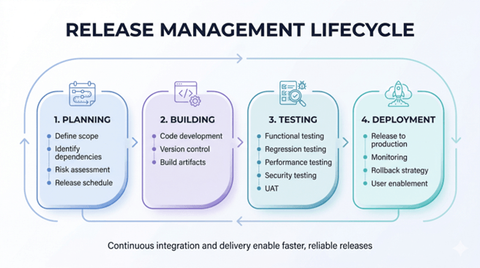
Integrating SCA Into the Software Development Lifecycle
SCA works best when component checks are integrated into ordinary engineering workflows instead of being performed only before a major release.
1. Developer Workstations and Code Repositories
Developers can run dependency checks while adding or updating packages. Early feedback helps teams identify known vulnerabilities and licensing concerns before they become embedded in a larger codebase.
Repository checks can also identify outdated components, missing version constraints, and dependencies that do not meet internal policy.
2. Continuous Integration and Continuous Delivery
CI/CD pipelines can scan dependencies during builds and evaluate results against defined risk thresholds.
For example, an organization may require immediate review of a critical vulnerability in a production-bound component while allowing a documented exception for a lower-priority finding.
Blocking rules should be clear, consistently applied, and proportionate. Poorly tuned controls can create alert fatigue or disrupt legitimate releases without improving security.
3. Artifact and Container Scanning
Scanning build artifacts and container images helps identify components that are actually packaged for deployment.
This step is important because the final artifact may differ from the source repository. Build processes can add dependencies, bundle libraries, or include operating-system packages that were not obvious during source-level review.
4. Release Approval
Release procedures can require a current component inventory, an assessment of high-risk findings, and evidence that required license obligations have been addressed.
Exceptions should identify the affected component, business rationale, risk owner, compensating controls, approval date, and review deadline.
5. Continuous Monitoring
New vulnerabilities may be disclosed after an application has been deployed. Continuous monitoring allows teams to compare new advisories against previously identified components and determine which applications need attention.
A reliable process should connect findings to actual deployed versions rather than assuming that every repository still represents the production environment.
Remediation Strategies for Vulnerable Dependencies
When a vulnerability is identified, the organization should establish whether the affected component is present, whether the vulnerable code path matters, and what remediation options are available.
Upgrade to a Patched Version
If a fixed version is available, upgrading is often the preferred option. Teams should review release notes, breaking changes, compatibility requirements, and testing results before deployment.
Updating a direct dependency may also require adjustments to transitive dependencies.
Replace the Component
If a dependency is unsupported, repeatedly vulnerable, or incompatible with internal policy, the organization may consider a maintained alternative.
Replacement requires an assessment of functionality, security posture, license terms, maintenance quality, and migration effort.
Apply a Mitigation
Where an immediate upgrade is not feasible, a team may disable affected functionality, restrict access, modify configuration, or implement another documented mitigation.
A mitigation should be evaluated against the actual vulnerability conditions. It should not be treated as a permanent fix unless the residual risk is understood and formally accepted.
Remove Unnecessary Dependencies
Unused packages increase maintenance effort and may introduce avoidable risk. Removing unnecessary dependencies can simplify the application and reduce its exposure, provided the package is genuinely unused and removal does not break required functionality.
Manage Exceptions
Some vulnerabilities cannot be fixed immediately because of compatibility constraints, vendor dependencies, or operational requirements.
An exception process should define the reason for acceptance, risk owner, affected assets, compensating controls, and a target date for reassessment. Exceptions should not silently become permanent.
Code Governance and Organizational Responsibilities
SCA is more effective when responsibilities are clearly divided across engineering, security, legal, procurement, and business leadership.
Development teams maintain dependency declarations, investigate findings, test upgrades, and follow approved package policies.
Application security teams define scanning standards, prioritize vulnerabilities, validate findings, and coordinate remediation for high-impact issues.
Legal and compliance teams review complex licensing questions, contractual requirements, and obligations associated with software distribution.
Procurement and vendor management teams assess third-party software, supplier disclosures, support commitments, and component-related contractual risks.
Enterprise architecture teams establish preferred technologies, approved package sources, and standards for dependency lifecycle management.
Business and risk owners make documented decisions about residual risk when remediation cannot be completed within the required timeframe.
Governance should encourage accountability without creating unnecessary friction. Developers need clear policies, actionable findings, and a defined path for requesting exceptions or approving alternative components.
Regulatory and Industry Considerations
Software composition governance can support broader cybersecurity, procurement, and software supply chain requirements. The exact obligations depend on the organization, the product, the sector, and the jurisdictions involved.
In India, organizations should assess applicable obligations under relevant information technology and data protection laws, sector-specific regulatory requirements, contractual commitments, and current cybersecurity directions where applicable. The relevance of a particular requirement depends on the organization's role and circumstances.
Organizations that provide software to US federal agencies may need to evaluate applicable federal software supply chain requirements, including relevant provisions concerning SBOMs and secure software development. Other industries may have specific requirements for vulnerability management, third-party risk, software integrity, or audit evidence.
Common reference frameworks and resources include:
NIST Secure Software Development Framework (SSDF): Practices for integrating security into software development.
NIST Cybersecurity Framework: A broader framework for organizing cybersecurity risk management.
OWASP guidance: Resources covering application security and software supply chain risks.
SPDX and CycloneDX specifications: Standards for representing software component information.
Open Source Security Foundation (OpenSSF): Projects and guidance related to open-source software security.
Frameworks and standards are not interchangeable, and using a tool or generating an SBOM does not automatically satisfy every legal or contractual obligation. Organizations should verify current official requirements and determine which provisions apply to their products.
Selecting an Enterprise SCA Platform
Choosing an SCA platform requires evaluating both technical coverage and operational suitability.
Important criteria include:
Ecosystem coverage: Support for the programming languages, package managers, frameworks, and build systems in use.
Dependency discovery: Detection of direct, transitive, bundled, and, where supported, binary dependencies.
Vulnerability intelligence: Timely advisory updates, affected-version accuracy, and useful remediation guidance.
License analysis: Identification of license metadata, attribution requirements, and potential policy conflicts.
SBOM generation: Support for relevant formats, artifact types, and automated updates.
Developer workflow integration: Connections to repositories, IDEs, build pipelines, ticketing systems, and release approvals.
Risk prioritization: Context-aware analysis that considers exploitability and asset importance.
Reporting and audit evidence: Traceable decisions, exception records, and historical findings.
Enterprise administration: Access controls, policy management, scalability, and support for multiple teams.
Data handling: Clear treatment of source code, package metadata, credentials, and proprietary information.
A pilot should use representative repositories, build artifacts, and licensing scenarios. Evaluation should measure detection quality, false-positive rates, workflow impact, remediation effectiveness, and the amount of manual review required.
Practical Enterprise SCA Checklist
Before considering an SCA program operationally mature, confirm that the organization can answer these questions:
Are all important repositories and production artifacts covered?
Are direct and transitive dependencies identified?
Are component versions recorded accurately?
Are vulnerability findings assigned to responsible teams?
Are critical findings prioritized using business context?
Are fixes tested before release?
Are license obligations reviewed for intended use and distribution?
Are SBOMs generated and maintained where required or appropriate?
Are unsupported and abandoned packages identified?
Are dependency changes reviewed through approved workflows?
Are exceptions documented with owners and reassessment dates?
Are newly disclosed vulnerabilities correlated with deployed components?
Are audit records and remediation evidence retained appropriately?
Are SCA policies reviewed as technology, products, and legal requirements change?
The checklist should be adapted to the organization's architecture, risk profile, and regulatory obligations. Completing it is not, by itself, proof that software is secure or legally compliant.
Frequently Asked Questions
1. What is the primary purpose of Software Composition Analysis?
SCA helps organizations identify third-party software components and assess their associated vulnerabilities, licensing obligations, and maintenance risks. It supports more informed dependency management throughout the software development lifecycle.
2. How is SCA different from SAST?
SCA focuses on third-party and open-source components, including their versions, vulnerabilities, and licenses. SAST examines application source code or related representations for potentially insecure coding patterns. The two approaches complement each other.
3. Does every open-source license require source-code disclosure?
No. Obligations vary by license and the way the component is used, modified, and distributed. Some licenses primarily require preserving notices, while others impose additional conditions in particular circumstances. Complex cases should be reviewed by qualified legal professionals.
4. What is the difference between SCA and an SBOM?
SCA is the broader process of identifying and analyzing software components and their risks. An SBOM is a structured inventory of components in a software product or artifact. An SBOM can provide important input to SCA, vulnerability response, and supply chain governance.
5. How often should enterprises scan software dependencies?
Scanning should generally occur whenever dependencies change or a build is created, with additional monitoring for new vulnerability disclosures affecting deployed software. The appropriate frequency depends on release practices, application criticality, exposure, and internal risk policies.
Conclusion
Enterprise Software Composition Analysis helps organizations understand the third-party components embedded in their applications and manage the security, licensing, and maintenance risks those components introduce.
A mature SCA program combines accurate dependency inventories, timely vulnerability intelligence, thoughtful license review, SBOM management, and clearly assigned remediation responsibilities. Integrating these practices into development and release workflows makes it easier to identify problems early and respond when new risks emerge.
The strongest results come from treating SCA as an ongoing governance capability rather than a one-time scan. Regular reviews, evidence-based prioritization, and coordinated decisions across engineering, security, legal, and business teams help maintain a more reliable software supply chain.

Related Post...