Business Liability Guide: Legal Risks, Corporate Protections, Compliance Factors, and Planning Insights
Business liability refers to legal or financial responsibility that can arise from a company's activities, contracts, employees, products, property, data, or other business operations.
Liability risks vary considerably between businesses. A construction company may face workplace and project-related risks, while a technology company may have greater exposure involving contracts, intellectual property, cybersecurity, or data privacy.
Understanding potential liabilities can help organizations establish appropriate corporate structures, contracts, insurance arrangements, internal controls, and compliance processes.
Why Business Liability Matters
Business liabilities can affect financial resources, operations, reputation, contractual relationships, and long-term planning.
Potential areas of exposure include:
Contract disputes
Customer claims
Employee-related claims
Product liability
Property damage
Professional negligence
Workplace incidents
Data breaches
Intellectual-property disputes
Regulatory violations
Environmental obligations
Tax liabilities
Debt obligations
A risk-management program can help organizations identify significant exposures and establish appropriate controls.
Common Types of Business Liability
Contractual Liability
Businesses routinely enter agreements with customers, suppliers, employees, landlords, lenders, technology providers, and other parties.
Contractual liability can arise when an organization:
Fails to perform an obligation
Misses a deadline
Breaches a contractual requirement
Fails to meet specified standards
Violates confidentiality provisions
Fails to make required payments
Does not satisfy indemnification obligations
Contracts should clearly define responsibilities, limitations, performance requirements, dispute procedures, and other important terms.
Product Liability
Businesses that manufacture, distribute, or provide products may face claims involving alleged defects, inadequate warnings, or other product-related issues.
Product-liability exposure can depend on the product, business role, jurisdiction, applicable law, and circumstances surrounding the claim.
Appropriate quality controls, documentation, product instructions, and insurance considerations can be important components of risk planning.
Professional Liability
Professional or advisory activities can create potential liability when customers allege that professional work did not meet applicable contractual or professional requirements.
Examples can include:
Consulting
Accounting
Engineering
Architecture
Technology consulting
Healthcare-related professional activities
Legal services
Professional-liability exposure is highly dependent on the profession, contract, jurisdiction, and applicable professional standards.
Employment-Related Liability
Employers can face legal obligations relating to employees and workplace practices.
Potential areas include:
Wage and hour requirements
Workplace discrimination
Harassment claims
Employment contracts
Employee classification
Workplace safety
Benefits obligations
Payroll requirements
Leave requirements
Termination procedures
Employment requirements vary by jurisdiction and workforce circumstances.
Corporate Structure and Liability Protection
Business entities can provide legal separation between an organization and its owners under applicable law.
Common structures include:
Limited liability companies
Corporations
Partnerships
Sole proprietorships
The scope of liability protection depends on the entity, jurisdiction, organizational practices, contractual arrangements, and circumstances.
Entity formation alone does not eliminate every potential personal or organizational liability.
Organizations should maintain appropriate corporate records, financial separation, governance procedures, and compliance practices.
Limited Liability Companies
An LLC generally provides a legal structure that can separate the business entity from its members under applicable state law.
Important considerations may include:
Formation documents
Operating agreements
Ownership records
Separate business accounts
Tax elections
State filings
Governance practices
Contract authority
The exact protections and requirements vary by state and business circumstances.
Corporations
Corporations are separate legal entities with their own governance and ownership structures.
Corporate liability planning can involve:
Articles of incorporation
Bylaws
Board records
Shareholder records
Corporate resolutions
Financial records
Contracts
State filings
Maintaining appropriate corporate formalities can be important to preserving the intended legal separation of the entity from its owners.
Partnerships and Sole Proprietorships
Partnerships can create different liability relationships depending on the partnership type and applicable law.
Sole proprietorships generally do not create the same legal separation between the owner and business that can exist with a separate legal entity.
Businesses should evaluate entity structure based on their activities, ownership, tax considerations, financing, liability exposure, and applicable state law.
Piercing the Corporate Veil
Corporate or LLC liability protection is not necessarily absolute.
Under certain circumstances, courts may disregard an entity's separate legal status, sometimes described as piercing the corporate veil.
Potential factors can vary by jurisdiction but may include:
Failure to maintain separate finances
Inadequate records
Improper commingling of funds
Misuse of the entity
Fraudulent conduct
Failure to follow required governance procedures
The legal standards differ significantly between jurisdictions.
Business Insurance and Liability Risk
Insurance can be one component of a broader business risk-management strategy.
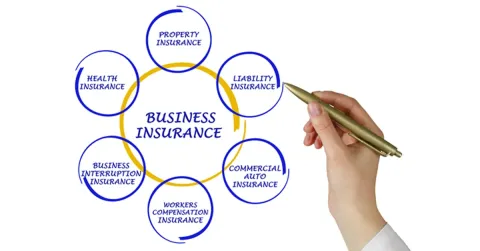
Depending on the business, relevant coverage may include:
General liability insurance
Professional liability insurance
Product liability insurance
Commercial property insurance
Workers compensation insurance
Commercial auto insurance
Cyber insurance
Directors and officers insurance
Employment practices liability insurance
Business interruption coverage
Insurance policies can contain exclusions, deductibles, coverage limits, conditions, and other provisions that affect whether a particular event is covered.
Insurance should therefore be evaluated alongside contracts, internal controls, entity structure, and operational risk.
Contractual Risk Management
Contracts can help establish how potential risks are allocated between parties.
Important provisions can include:
Indemnification
Limitation of liability
Representations and warranties
Insurance requirements
Confidentiality
Data-protection obligations
Dispute resolution
Governing law
Termination rights
Force majeure
Performance standards
The enforceability and effect of these provisions depend on applicable law and the specific agreement.
Compliance and Regulatory Liability
Businesses may have legal obligations arising from federal, state, and local regulations.
Depending on the organization, these can involve:
Business licensing
Tax compliance
Employment regulations
Environmental rules
Consumer protection
Data privacy
Cybersecurity
Industry-specific regulation
Financial regulation
Workplace safety
Recordkeeping
A compliance program should identify requirements relevant to the organization's actual activities rather than relying on generic policies.
Data and Cybersecurity Liability
Businesses increasingly manage customer, employee, financial, and operational information electronically.
Potential risks include:
Unauthorized access
Data breaches
Account compromise
Loss of confidential information
Inadequate access controls
Third-party security failures
Improper data retention
Privacy violations
Cybersecurity controls can include:
Access management
Multi-factor authentication
Encryption
Security monitoring
Backups
Incident-response procedures
Employee awareness
Vendor security reviews
Data-retention controls
The appropriate controls depend on the organization's systems, data, industry, and applicable requirements.
Intellectual Property Liability
Intellectual-property disputes can involve:
Patents
Trademarks
Copyrights
Trade secrets
Software
Domain names
Licensing rights
Organizations should establish procedures for identifying owned and licensed intellectual property and reviewing third-party rights before using protected material.
Environmental and Property Liability
Certain businesses may have environmental or property-related obligations.
Potential areas include:
Hazardous materials
Waste management
Contamination
Property damage
Environmental permits
Workplace exposure
Construction activities
Industrial operations
Requirements can vary substantially according to business activity, property, materials, and jurisdiction.
Specialized environmental and engineering professionals may be appropriate where significant exposure exists.
Financial and Tax Liabilities
Business liability can also arise from financial and tax obligations.
Examples include:
Business loans
Accounts payable
Lease obligations
Payroll taxes
Income taxes
Sales taxes
Property taxes
Contractual payment obligations
Organizations should maintain accurate financial records and monitor payment and filing obligations.
Unrecognized or poorly documented liabilities can affect financial planning and business valuation.
Risk Assessment
A structured liability assessment can help organizations prioritize risks.
| Risk Area | Example Exposure | Potential Control |
|---|---|---|
| Contracts | Breach or dispute | Contract review |
| Employees | Workplace claims | HR policies and training |
| Customers | Injury or property damage | Safety controls and insurance |
| Products | Defect-related claims | Quality controls |
| Cybersecurity | Data exposure | Access controls and monitoring |
| Intellectual property | Infringement dispute | IP review |
| Tax | Unpaid obligations | Tax compliance procedures |
| Regulatory | Non-compliance | Compliance monitoring |
| Property | Damage or environmental exposure | Inspection and risk controls |
Risk priority should consider the likelihood of an event, potential impact, existing controls, and ability to recover.
Business Liability and Risk Management
Liability management works best as part of a broader risk-management framework.
Organizations can combine:
Risk identification
Internal controls
Contract review
Insurance review
Compliance monitoring
Employee training
Cybersecurity controls
Financial controls
Incident reporting
Business continuity planning
The objective is to reduce avoidable exposure while maintaining appropriate operational flexibility.
Recent Developments
Business liability increasingly intersects with cybersecurity, artificial intelligence, data privacy, third-party risk, and regulatory requirements.
Organizations using AI systems may need to consider issues involving:
Confidential information
Intellectual property
Data accuracy
Privacy
Vendor contracts
Human oversight
Recordkeeping
Regulatory requirements
Third-party relationships can also create additional exposure when vendors process customer data, provide critical technology, handle payments, or perform operational functions.
As business systems become more interconnected, organizations may need to evaluate liability across their broader supplier and technology ecosystem rather than focusing only on internal operations.
Business Liability Planning Checklist
Organizations can periodically review:
Confirm the legal structure
Maintain appropriate corporate records
Keep business and personal finances appropriately separated
Review material contracts
Identify significant liabilities
Review insurance policies
Monitor licenses and permits
Review employment obligations
Assess cybersecurity controls
Review intellectual-property rights
Monitor tax obligations
Evaluate environmental exposure where applicable
Review supplier and third-party risks
Maintain incident-reporting procedures
Update risk assessments periodically
Review business continuity arrangements
Tools and Resources
Useful business-liability planning resources can include:
Corporate governance records
Operating agreements
Corporate bylaws
Contract-management systems
Insurance policy records
Financial statements
Tax records
Compliance calendars
Risk registers
Cybersecurity assessments
Vendor-risk assessments
Intellectual-property records
Employee policies
Incident-response plans
Business continuity plans
Frequently Asked Questions
What is business liability?
Business liability refers to legal or financial responsibility that can arise from a company's activities, contracts, employees, products, property, data, or other operations.
Does an LLC eliminate business liability?
No. An LLC can provide legal separation between the business and its members under applicable law, but it does not eliminate every type of liability or guarantee personal protection in every circumstance.
What are common types of business liability?
Common categories include contractual, product, professional, employment, property, cybersecurity, intellectual-property, tax, environmental, and regulatory liabilities.
Can business insurance protect against every liability?
No. Insurance coverage depends on the specific policy, exclusions, limits, conditions, deductibles, and circumstances of a claim. Insurance is generally one component of broader risk management.
How can a business reduce liability risks?
Organizations can identify major exposures, maintain appropriate records, review contracts, establish internal controls, monitor compliance, maintain suitable insurance, protect data, train employees, and periodically reassess risks.
Conclusion
Business liability can arise from many areas of an organization's activities, including contracts, employees, products, property, finances, technology, intellectual property, and regulatory obligations.
Corporate structure, contractual controls, insurance, compliance programs, internal controls, cybersecurity, and sound recordkeeping can all contribute to broader liability management.
No single measure eliminates every business risk. Organizations should evaluate their actual operations, applicable laws, contractual responsibilities, insurance arrangements, and risk profile and obtain qualified professional guidance where significant exposure exists.

Related Post...

A Complete Guide to B2B Marketing: Overview, Insights, and Best Practices
Updated: March 06, 2026
Read More