CNC Milling Machines: An Informative Guide to Basics, Working, and Applications
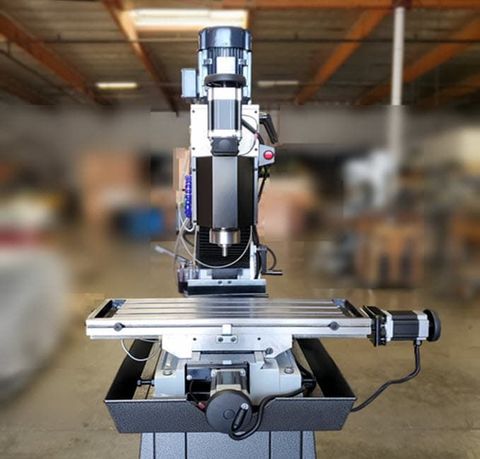
CNC milling machines are computer-controlled manufacturing systems used to remove material from a solid workpiece using rotating cutting tools. The term CNC stands for Computer Numerical Control, which means the machine follows programmed instructions rather than manual operation.
These machines were developed to improve accuracy, repeatability, and efficiency in machining tasks that were traditionally performed by manual milling machines. As industrial products became more complex and tolerance requirements became tighter, manual methods were no longer sufficient. CNC milling emerged to meet the growing demand for precision manufacturing across multiple industries.
Today, CNC milling machines are widely used to shape metals, plastics, composites, and other materials into precise components. Their existence is closely tied to the evolution of automation, digital manufacturing, and computer-aided engineering.
Importance: Why CNC Milling Machines Matter Today
CNC milling machines play a critical role in modern manufacturing systems. They influence how products are designed, developed, and produced at scale.
Their importance can be understood through the following perspectives:
-
Precision manufacturing: CNC milling enables micron-level accuracy that is difficult to achieve manually.
-
Consistency: Each produced component matches the programmed design with minimal variation.
-
Scalability: CNC systems support batch production without loss of quality.
-
Complex geometry handling: Advanced tool paths allow machining of intricate shapes and contours.
Industries that rely heavily on CNC milling include:
-
Automotive and transportation
-
Aerospace and defense manufacturing
-
Electronics and semiconductor production
-
Medical device manufacturing
-
Industrial equipment fabrication
By reducing human error and improving process control, CNC milling machines help address challenges such as material waste, dimensional inconsistency, and production inefficiency.
Recent Updates: Trends and Developments in the Past Year
Over the past year, CNC milling technology has continued to evolve in response to digital manufacturing trends and industrial automation needs.
Key developments observed during 2024–2025 include:
-
Increased adoption of smart CNC systems (2024)
Manufacturers have integrated sensors and data analytics into CNC milling machines to enable real-time monitoring and predictive maintenance. -
Growth of hybrid machining centers (late 2024)
Hybrid systems that combine milling with additive manufacturing functions have gained attention for rapid prototyping and complex part creation. -
Expanded use of AI-assisted toolpath optimization (2025)
Artificial intelligence algorithms are being used to optimize cutting strategies, reduce tool wear, and improve surface finish. -
Improved energy-efficient machine designs (2024)
New models focus on reduced power consumption and improved thermal stability to support sustainable manufacturing goals.
These updates reflect a broader shift toward intelligent, connected, and environmentally responsible machining environments.
Laws or Policies: Regulatory Influence on CNC Milling Machines
CNC milling machines are subject to various regulations and standards depending on the country and industry in which they are used. These rules are designed to ensure safety, quality, and environmental responsibility.
Common regulatory areas include:
-
Machine safety standards
Compliance with industrial safety standards such as guarding systems, emergency stops, and operator protection guidelines. -
Environmental regulations
Rules related to coolant disposal, metal waste handling, and emissions from machining processes. -
Workplace compliance policies
Regulations that address operator training, noise exposure, and ergonomic machine operation. -
Quality and certification frameworks
CNC-machined components used in regulated industries must align with established quality management standards.
Government-backed manufacturing modernization programs in several countries also encourage the adoption of CNC technology to strengthen industrial infrastructure and technical skill development.
Tools and Resources: Helpful CNC Milling References
A wide range of tools and digital resources support CNC milling operations and learning.
Commonly used resources include:
-
CAD software for part design and modeling
-
CAM software for toolpath generation and simulation
-
CNC programming references for G-code and M-code fundamentals
-
Machining calculators for feed rate, spindle speed, and material removal rate
-
Industry knowledge portals that publish machining best practices and technical documentation
Example Table: Typical CNC Milling Parameters
| Parameter | Description | Purpose |
|---|---|---|
| Spindle Speed | Rotation speed of the cutting tool | Controls cutting efficiency |
| Feed Rate | Tool movement speed | Affects surface quality |
| Depth of Cut | Material removed per pass | Influences tool load |
| Tool Diameter | Size of cutting tool | Determines slot width |
These tools and references help operators and engineers make informed machining decisions.
Frequently Asked Questions About CNC Milling Machines
What materials can be machined using CNC milling machines?
CNC milling machines can process metals, plastics, composites, and engineered materials, depending on tooling and machine configuration.
How does CNC milling differ from CNC turning?
CNC milling uses rotating cutting tools with a stationary workpiece, while CNC turning rotates the workpiece against a fixed cutting tool.
What level of accuracy can CNC milling achieve?
Modern CNC milling machines can achieve tolerances within microns when properly programmed and maintained.
Is CNC milling suitable for complex shapes?
Yes, multi-axis CNC milling machines are specifically designed to handle complex geometries and detailed contours.
What skills are required to operate CNC milling machines?
Operators typically need knowledge of machining principles, CNC programming basics, and safety procedures.
CNC Milling Machine Applications Across Industries
CNC milling machines are applied across diverse industrial environments.
Common application areas include:
-
Engine components and structural parts
-
Precision molds and dies
-
Electronic enclosures and heat sinks
-
Medical implants and surgical tools
-
Custom mechanical assemblies
Application Distribution Table
| Industry | Primary Use |
|---|---|
| Automotive | Engine and transmission parts |
| Aerospace | Lightweight structural components |
| Medical | High-precision instruments |
| Electronics | Miniature component housings |
These applications highlight the versatility and reliability of CNC milling systems.
Conclusion: Understanding the Role of CNC Milling Machines
CNC milling machines represent a foundational technology in modern manufacturing. By combining computer control with mechanical precision, they enable consistent, accurate, and scalable production of complex components.
Their continued development reflects the broader movement toward automation, digital integration, and intelligent manufacturing systems. Understanding how CNC milling machines work, where they are used, and how they are regulated provides valuable insight into the technologies shaping today’s industrial landscape.

You may also like...

CNC Milling Machines: An Informative Guide to Basics, Working, and Applications
Last Update: March 02, 2026
Read
Heating Repair Service Guide: Learn the Basics, Facts, and Maintenance Tips
Last Update: March 02, 2026
Read