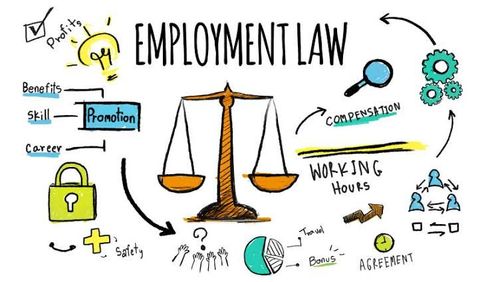
Employment Law Basics Guide: Workplace Regulations, Employee Rights, Legal Insights, and Practical Information
Employment law establishes rules governing the relationship between employers and workers. In the United States, workplace requirements can come from federal statutes, state laws, local ordinances, regulations, court decisions, employment agreements, and workplace policies.
The rules can cover wages and hours, workplace safety, discrimination, harassment, leave, employee classification, privacy, labor rights, recordkeeping, and termination-related matters.
Employment requirements can differ substantially depending on the employer, industry, workforce, location, and type of employment relationship. Federal law provides a baseline in many areas, while state and local laws may provide additional protections.
Why Employment Law Matters
Understanding employment law can help organizations develop workplace policies that align with applicable requirements and can help workers understand basic workplace protections.
Employment-law issues commonly involve:
Wage and overtime rules
Employee classification
Workplace discrimination
Harassment
Reasonable accommodations
Family and medical leave
Workplace safety
Labor organizing
Employee privacy
Payroll and recordkeeping
Employment agreements
Termination and retaliation
State and local workplace requirements
The U.S. Department of Labor maintains an Employment Law Guide covering major federal statutes and regulations affecting businesses and workers.
What Is Employment Law?
Employment law is a broad area of law governing workplace relationships and obligations.
It can involve several distinct legal areas.
Wage and Hour Law
Federal wage-and-hour requirements are primarily associated with the Fair Labor Standards Act, which addresses areas such as minimum wage, overtime, recordkeeping, and child-labor standards.
Whether a particular worker is entitled to overtime or other protections can depend on the worker's classification, duties, compensation structure, and applicable exemptions.
Employment Discrimination Law
Federal laws enforced by the Equal Employment Opportunity Commission prohibit covered employers from discriminating based on protected characteristics identified under applicable statutes.
EEOC-enforced laws address areas including race, color, religion, sex, national origin, age for covered workers age 40 or older, disability, and genetic information.
Workplace Safety Law
The Occupational Safety and Health Act establishes federal workplace-safety requirements administered by OSHA for covered workplaces.
Safety obligations can involve hazard communication, protective equipment, training, recordkeeping, workplace conditions, and industry-specific requirements.
Labor and Collective Activity
The National Labor Relations Act protects covered employees' rights to organize, join or assist labor organizations, bargain collectively, and engage in certain concerted activities concerning workplace conditions. These protections can apply even when employees are not represented by a union.
Employee Rights in the Workplace
Employee rights depend on the applicable federal, state, and local laws and the worker's circumstances.
Common federally protected areas include:
Protection against unlawful discrimination
Protection against workplace harassment covered by federal law
Protection against certain forms of retaliation
Certain workplace accommodations
Wage and hour protections
Workplace safety protections
Certain family and medical leave rights
Certain rights to organize and engage in protected concerted activity
EEOC guidance states that covered employees and applicants have protections against discrimination involving areas such as race, color, religion, sex, national origin, disability, genetic information, and age.
Employees covered by the NLRA may also have rights to discuss workplace conditions and wages and to act together concerning employment conditions.
Employment Classification
Correctly determining whether a worker is an employee or an independent contractor can affect taxes, wage protections, benefits, recordkeeping, and other legal obligations.
Classification analysis may consider factors such as:
Degree of control over the work
Economic dependence
Nature of the relationship
Permanence of the arrangement
Opportunity for profit or loss
Whether the work is integral to the business
Contractual terms
Actual working conditions
Classification rules can differ between federal laws and state laws. Businesses should therefore avoid assuming that one classification test applies to every legal issue.
Wage and Overtime Rules
Federal wage-and-hour law can establish minimum requirements for covered employees.
Important concepts include:
Minimum wage
Overtime
Hours worked
Workweek calculations
Timekeeping
Payroll records
Exempt and nonexempt classifications
Deductions
Child-labor requirements
Overtime eligibility is not determined solely by an employee's job title. Duties, compensation, and applicable exemptions can matter.
State and local wage laws may impose additional requirements, including higher minimum wages, paid leave, scheduling rules, or other workplace protections.
Workplace Discrimination and Harassment
Federal employment-discrimination laws can apply to many aspects of employment, including recruitment, compensation, assignments, promotions, training, discipline, termination, and other terms and conditions of employment.
Covered discrimination protections can include:
Race
Color
Religion
Sex
Pregnancy-related protections
Sexual orientation
Gender identity
National origin
Age
Disability
Genetic information
The EEOC also identifies harassment and retaliation as areas covered by federal employment-discrimination laws.
Employers may need policies and procedures addressing complaints, investigations, accommodations, workplace conduct, and retaliation prevention.
Reasonable Workplace Accommodations
Certain federal laws require covered employers to provide reasonable accommodations in qualifying circumstances.
Potential accommodations can involve:
Changes to work schedules
Modified workplace procedures
Accessible equipment or facilities
Adjustments to job duties
Leave in qualifying circumstances
Changes related to religious practices
Pregnancy-related workplace adjustments
The legal requirements depend on the applicable law, employee circumstances, employer coverage, and whether an accommodation would create an undue hardship.
The EEOC identifies reasonable accommodation obligations involving disability, religion, and pregnancy, childbirth, or related medical conditions under applicable federal laws.
Family and Medical Leave
The Family and Medical Leave Act provides qualifying employees of covered employers with job-protected leave for certain family and medical reasons.
Eligibility and coverage can depend on factors such as:
Employer size
Employee tenure
Hours worked
Worksite
Qualifying reason for leave
Other federal, state, or local leave laws may provide additional rights.
Because leave requirements can overlap, organizations should review applicable laws and policies before denying or approving a particular leave request.
Workplace Safety and OSHA Requirements
Workplace safety is another major component of employment law.
OSHA requirements can address:
Hazard communication
Personal protective equipment
Machine safety
Workplace inspections
Safety training
Recordkeeping
Emergency procedures
Exposure controls
Industry-specific hazards
Employers may also have state-plan requirements or additional state workplace-safety obligations.
Safety policies should be tailored to the actual hazards present in the workplace rather than relying solely on generic policies.
Employee Privacy and Workplace Monitoring
Employee privacy can involve multiple areas of law rather than one universal federal privacy statute.
Workplace issues can include:
Electronic communications
Email monitoring
Internet usage
Location tracking
Biometric information
Drug testing
Background checks
Employee medical information
Personnel records
Video surveillance
Applicable requirements may come from federal laws, state privacy statutes, sector-specific regulations, employment agreements, and common-law principles.
Organizations should define legitimate purposes for workplace monitoring and evaluate applicable notice, consent, access, retention, and data-security requirements.
Employment Contracts and Workplace Policies
Written employment documents can establish important terms and expectations.
Common documents include:
Employment agreements
Offer letters
Confidentiality agreements
Non-disclosure agreements
Employee handbooks
Workplace conduct policies
Remote-work policies
Leave policies
Compensation policies
Arbitration agreements
Intellectual-property agreements
Contract enforceability varies by jurisdiction and document type. Some provisions may be restricted or subject to specific statutory requirements.
Policies should also be reviewed periodically because federal, state, and local requirements can change.
Termination and Retaliation
Employment termination can involve legal considerations beyond the decision itself.
Organizations may need to consider:
Applicable employment agreements
Anti-discrimination laws
Retaliation protections
Wage payment requirements
Final-pay rules
Leave balances
Severance provisions
Benefits continuation
Recordkeeping
Unemployment requirements
Retaliation protections are particularly important. For example, federal employment-discrimination laws protect individuals in covered circumstances when they oppose unlawful discrimination, file a charge, or participate in an investigation.
The NLRB also protects covered employees from certain retaliation or interference involving protected concerted activity.
Employee Rights and Labor Organizing
The NLRA provides covered employees with rights relating to collective activity.
Employees may have rights involving:
Forming or joining a union
Supporting union organizing
Bargaining collectively
Acting together regarding workplace conditions
Discussing wages
Raising workplace concerns collectively
Refraining from protected activities
The NLRB explains that protected concerted activity can involve employees acting together regarding wages or working conditions even without a union.
Recent Employment Law Developments
Employment law continues to change through legislation, regulations, agency actions, court decisions, and state-level developments.
Important areas to monitor include:
Wage-and-hour regulations
Worker classification rules
Pay-transparency requirements
Pregnancy and disability accommodations
State paid-leave laws
Remote-work requirements
Workplace privacy
Artificial intelligence in employment decisions
Noncompete restrictions
Independent-contractor rules
Labor organizing developments
State and local discrimination protections
Because employment rules can change quickly, businesses should rely on current federal and state sources when updating policies.
Laws, Policies, and Compliance
Major U.S. employment-law frameworks can include:
Fair Labor Standards Act (FLSA) — wages, overtime, recordkeeping, and child-labor rules.
Title VII of the Civil Rights Act — employment discrimination protections.
Americans with Disabilities Act (ADA) — disability-related employment protections and accommodations.
Age Discrimination in Employment Act (ADEA) — protection against covered age discrimination involving workers age 40 and older.
Equal Pay Act — certain protections against sex-based wage discrimination.
Pregnant Workers Fairness Act (PWFA) — qualifying workplace accommodations related to pregnancy, childbirth, and related medical conditions.
Family and Medical Leave Act (FMLA) — qualifying family and medical leave protections.
Occupational Safety and Health Act — workplace health and safety requirements.
National Labor Relations Act (NLRA) — protected organizing and concerted activity.
Genetic Information Nondiscrimination Act (GINA) — certain protections concerning genetic information.
The EEOC identifies the major federal equal-employment laws it enforces, while the Department of Labor provides guidance on other major workplace statutes.
Employment Law Compliance Checklist
Organizations can use a structured review process to identify potential compliance gaps.
Confirm applicable federal employment laws
Review state and local requirements
Classify workers appropriately
Review wage and overtime practices
Maintain required employment records
Review discrimination and harassment policies
Establish complaint and investigation procedures
Review accommodation processes
Review leave policies
Evaluate workplace-safety requirements
Review employee-monitoring practices
Check employment agreements
Review termination procedures
Train managers on workplace policies
Monitor regulatory and legislative changes
Tools and Resources
Useful U.S. resources include:
U.S. Department of Labor Employment Law Guide — federal workplace statutes and regulations.
Equal Employment Opportunity Commission — discrimination, harassment, accommodation, and retaliation guidance.
National Labor Relations Board — employee organizing and protected concerted-activity information.
OSHA — workplace health and safety requirements.
State labor departments — state wage, leave, and employment requirements.
State civil-rights agencies — state and local discrimination protections.
Employment-law attorneys — guidance for organization-specific legal questions.
Frequently Asked Questions
What is employment law?
Employment law is the body of federal, state, and local rules governing workplace relationships, employee protections, employer obligations, wages, safety, discrimination, leave, labor rights, and related matters.
What are basic employee rights in the United States?
Rights depend on the applicable law and circumstances. Common protections include rights related to discrimination, workplace safety, wages, certain leave, accommodations, and protected labor activity.
Can an employee be fired for complaining about workplace discrimination?
Federal law protects covered employees against retaliation for certain protected activities, including opposing unlawful discrimination or participating in an EEOC process. The specific circumstances matter.
What is the difference between an employee and an independent contractor?
An employee generally works within an employment relationship governed by applicable labor and employment rules, while an independent contractor operates under a different legal relationship. Classification depends on the applicable legal test and actual circumstances.
Where can I find current U.S. employment-law information?
The Department of Labor, EEOC, NLRB, OSHA, and applicable state agencies provide authoritative information. For situation-specific legal questions, an appropriately qualified employment-law professional can review the relevant facts.
Conclusion
Employment law covers a wide range of workplace issues, from wages and employee classification to discrimination, safety, leave, labor rights, privacy, contracts, and termination.
The applicable rules depend on factors such as employer size, industry, worker classification, location, and the specific workplace issue. Federal law provides important protections, but state and local laws can add further requirements.
For organizations, maintaining current policies, accurate records, manager training, and regular compliance reviews can help identify potential legal issues before they become more complicated.
For employees, understanding basic workplace rights and knowing where to find authoritative information can make it easier to recognize when a workplace issue may require further review.
Disclaimer

Related Post...

Home Automation Basics Guide: Explanation, Key Information, Useful Tips, and Smart Home Insights
Updated: January 06, 2026
Read More
Trust Planning Guide: Estate Documents, Asset Management, Legal Information, and Family Planning Insights
Updated: September 23, 2026
Read More
Estate Planning Basics Guide: Legal Documents, Asset Protection, Family Insights, and Practical Tips
Updated: September 23, 2026
Read More