Enterprise Accounts Payable Fraud Prevention Guide: Invoice Verification, Payment Authorization, Vendor Validation, and Financial Controls
Accounts payable departments handle invoices, vendor records, payment approvals, purchase orders, and financial transactions across an organization. Because these processes involve outgoing funds and sensitive financial information, weaknesses in accounts payable controls can expose a business to invoice fraud, unauthorized payments, duplicate billing, vendor impersonation, and employee misconduct.
Fraud attempts may involve altered bank details, fabricated invoices, compromised vendor email accounts, false payment instructions, or manipulation of approval workflows. Some incidents exploit technical weaknesses, while others take advantage of rushed approvals, inadequate verification, or excessive access privileges.
An effective accounts payable fraud prevention framework combines reliable invoice checks, independent vendor validation, segregation of duties, secure payment authorization, transaction monitoring, and documented investigation procedures. The objective is to identify suspicious activity before funds leave the organization and establish clear evidence for reviewing financial transactions.
What Is Accounts Payable Fraud Prevention?
Accounts payable fraud prevention refers to the policies, procedures, technology, and oversight mechanisms used to identify and reduce fraudulent or unauthorized payments within an organization's payable processes.
It covers the full payment lifecycle, from vendor onboarding and purchase approval to invoice processing, payment release, bank reconciliation, and exception investigation.
Common fraud scenarios include:
Fake invoice fraud: An organization receives a fabricated invoice for goods or work that was never authorized or provided.
Business email compromise: A criminal impersonates an employee, executive, or vendor to redirect a legitimate payment.
Vendor bank-detail manipulation: Payment instructions are changed without appropriate verification.
Duplicate invoice fraud: The same obligation is submitted more than once, sometimes with altered invoice references.
Purchase order manipulation: Fraudulent or unauthorized changes are made to purchase orders, quantities, prices, or delivery details.
Employee collusion: An employee works with an external party to bypass controls or direct funds improperly.
Unauthorized payment activity: Payments are processed outside approved procedures or without the required authority.
These scenarios can overlap. A fraudulent invoice, for example, may be supported by a compromised email account and approved through a poorly controlled workflow.
Why Strong Accounts Payable Controls Matter
Protect organizational funds
Preventive controls help ensure that payments are supported by legitimate business obligations and approved through the appropriate process.
Improve financial statement accuracy
Duplicate payments, fictitious liabilities, incorrect vendor balances, and unauthorized transactions can distort accounting records. Reconciliation and exception reviews help identify discrepancies.
Reduce operational disruption
Fraud investigations can require finance, procurement, IT, legal, and management teams to spend substantial time reviewing transactions and recovering records. Consistent controls can reduce avoidable investigation work.
Strengthen vendor relationships
Accurate records and controlled payment processes help legitimate vendors receive payments according to agreed terms while reducing confusion caused by disputed invoices or fraudulent instructions.
Support audit and regulatory readiness
Documented approvals, transaction records, access logs, and investigation evidence can help demonstrate how financial controls operate and how exceptions are handled.
Invoice Verification and Validation Procedures
Invoice verification should establish that a payment request represents a legitimate, authorized, accurately recorded business transaction.
1. Check invoice completeness
Review each invoice for essential information, including:
Vendor's registered or approved business name.
Invoice number and invoice date.
Purchase order or contract reference, where applicable.
Description and quantity of goods or work.
Unit prices, totals, taxes, and applicable adjustments.
Payment terms and due date.
Remittance details consistent with approved vendor records.
Missing information does not automatically indicate fraud, but incomplete documents should be resolved before payment according to company policy.
2. Perform purchase order matching
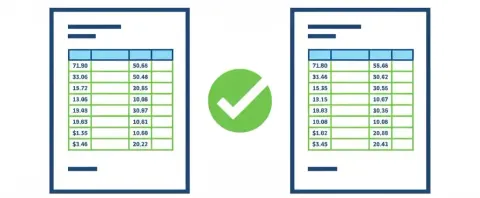
Where purchase orders are required, compare the invoice against the approved purchase order and relevant receipt or acceptance records.
A three-way match generally compares:
The purchase order, which establishes what was authorized.
The receiving record, which indicates what was received or accepted.
The invoice, which establishes what the vendor has requested for payment.
Investigate differences in quantities, prices, descriptions, tax treatment, or delivery status. Service-related invoices may require a different validation method, such as matching against a contract, milestone approval, or evidence of completed work.
3. Detect duplicate invoices
Duplicate detection should consider more than an exact invoice-number match. Fraudsters or processing errors may involve altered references, formatting changes, different invoice dates, or slightly modified vendor names.
Useful comparison fields include:
Vendor identifier.
Invoice number and amount.
Invoice date and payment due date.
Purchase order or contract reference.
Bank account details.
Description of goods or work.
Similarity to previously processed invoices.
Automated duplicate detection can flag likely matches, but a reviewer should investigate exceptions before deciding whether a payment is legitimate.
4. Validate tax and accounting details
Confirm that invoice totals, tax calculations, accounting codes, cost centers, and entity details follow the organization's requirements and applicable tax rules.
For Indian operations, the organization may need to verify relevant GST information, tax invoice particulars, and supplier details under applicable requirements. The precise checks depend on the transaction, tax treatment, and legal circumstances.
Vendor Validation and Master Data Protection
Vendor master data is a critical control point because it determines who can receive payments and where those payments are sent.
Establish a controlled onboarding process
Before activating a vendor, verify its identity using appropriate independent records. Depending on the vendor and jurisdiction, this may involve registration details, tax identifiers, business addresses, authorized contacts, and bank account documentation.
Use risk-based checks for high-value vendors, new overseas counterparties, unusual payment arrangements, and vendors requesting rapid changes to established payment instructions.
Verify bank-detail changes independently
A request to change bank details should trigger a separate verification process. Do not rely solely on the email or telephone number included in the change request, because those details may themselves be compromised.
A robust procedure includes:
Recording the requested change and the person submitting it.
Contacting a known vendor representative through an independently established channel.
Confirming the authorized account holder and relevant bank details.
Obtaining approval from an authorized employee who did not initiate the change.
Updating the vendor master record through a controlled workflow.
Retaining evidence of verification and approval.
Reviewing subsequent payments where the risk warrants additional scrutiny.
Changes to bank details immediately before a large payment, requests to use an unrelated account, or pressure to bypass standard verification should be escalated.
Restrict vendor master access
Only authorized personnel should create vendors, amend sensitive details, or deactivate records. Maintain access logs and review privileges periodically.
Where practical, separate vendor setup from invoice approval and payment release. This reduces the possibility that one person can create a fictitious vendor and authorize funds to that vendor without independent review.
Payment Authorization and Segregation of Duties
Payment authorization establishes who may approve transactions, under which conditions, and within what financial limits.
Use a defined approval matrix
An approval matrix should specify the authority required for different payment amounts, business units, transaction types, and risk categories.
For example, a routine payment may require an accounts payable review and budget-owner approval, while an unusually large or exceptional payment may require an additional finance controller or senior executive approval.
Thresholds should reflect the organization's size, transaction profile, and risk exposure. They should be documented and applied consistently.
Separate critical responsibilities
A strong control environment avoids concentrating the following activities in one person wherever practical:
Vendor creation and bank-detail modification.
Invoice entry and invoice approval.
Purchase approval and receipt confirmation.
Payment file preparation and payment release.
Bank reconciliation and payment processing.
Control administration and independent review.
Smaller organizations may have limited staffing. In those cases, compensating controls can include independent payment review, management approval of vendor changes, periodic transaction sampling, and restricted banking permissions.
Protect electronic payment workflows
Payment systems and banking platforms should require individual user accounts, strong authentication, appropriate transaction limits, and separate authorization for payment release where supported.
Avoid shared credentials and uncontrolled access to payment files. Review changes to payment templates, beneficiary records, and approval rules.
For urgent or unusual payments, use a documented exception process rather than allowing urgency alone to bypass normal controls.
Fraud Indicators and Transaction Monitoring
Accounts payable monitoring should combine automated alerts with human review and knowledge of normal business activity.
Common warning signs
Potential indicators include:
Multiple invoices with similar amounts or descriptions.
Payments to recently created vendors with little transaction history.
Bank-detail changes followed by immediate payment requests.
Repeated invoices just below approval thresholds.
Unusual weekend, holiday, or after-hours payment activity.
Invoices lacking supporting purchase orders or acceptance records.
Vendor accounts sharing unexpected bank details or contact information.
Unusual changes in payment frequency or transaction values.
Repeated manual overrides of invoice-matching rules.
Requests to divert funds to a new account without a clear business reason.
Payments to inactive vendors or unexpected changes in remittance instructions.
An individual indicator does not prove fraud. Legitimate business changes can produce similar patterns. Alerts should be assessed against transaction history, contractual documentation, vendor communication, and other available evidence.
Build useful monitoring rules
Organizations can configure rules for duplicate invoices, unusual payment amounts, changes to vendor master data, approval-limit patterns, and transactions involving restricted or inactive accounts.
Monitoring should consider false positives and missed detections. Rules should be tested against known transactions, adjusted when business processes change, and reviewed periodically by finance and risk teams.
Financial Controls Across the Payment Lifecycle
A complete framework combines preventive, detective, and corrective controls.
| Control type | Examples | Purpose |
|---|---|---|
| Preventive | Vendor validation, approval limits, purchase order matching | Stop unauthorized or unsupported payments |
| Detective | Duplicate-payment alerts, bank reconciliation, transaction reviews | Identify suspicious or incorrect activity |
| Corrective | Payment holds, account restrictions, investigation, recovery procedures | Contain and address identified problems |
| Governance | Policies, training, access reviews, internal audits | Maintain accountability and oversight |
Bank reconciliation
Reconcile payment records with bank statements and accounting entries on a defined schedule. Investigate unknown beneficiaries, unexpected withdrawals, duplicate settlements, failed payments, and differences between approved and executed payment files.
Independent review is especially important for material discrepancies or transactions that do not follow the normal payment process.
Exception management
Maintain an exception register covering blocked invoices, unmatched receipts, vendor verification issues, manual overrides, and unusual payment requests.
Each exception should have an owner, reason, supporting evidence, resolution date, and approval where required. Repeated exceptions may indicate a control weakness that needs process redesign rather than repeated manual correction.
Technology and Automation for Fraud Prevention
Technology can help organizations validate invoices, enforce approval rules, identify suspicious transactions, and maintain an audit trail.
Enterprise resource planning systems: Integrate purchasing, accounting, vendor records, invoice processing, and payment information.
Accounts payable automation platforms: Support invoice capture, approval routing, duplicate detection, matching, and exception management.
Vendor management systems: Maintain vendor identities, documentation, verification status, and controlled master-data changes.
Payment security controls: Apply user permissions, transaction limits, beneficiary validation, and dual authorization where available.
Fraud analytics tools: Analyze transaction patterns and highlight unusual amounts, repeated references, unexpected vendor relationships, and deviations from established behavior.
Identity and access management tools: Help enforce individual accounts, strong authentication, and appropriate permissions for finance and banking systems.
Automation should not be treated as a substitute for independent verification. OCR errors, incorrect matching rules, compromised accounts, and poor-quality source data can all undermine automated controls.
Incident Response and Fraud Investigation
When a suspicious payment or invoice is identified, the response should be prompt, controlled, and evidence-based.
Immediate response steps
Pause or place a hold on the transaction if authorized and operationally possible.
Notify the appropriate finance, fraud, security, or management contact.
Verify the transaction and vendor instructions through trusted channels.
Preserve invoices, emails, approval records, system logs, payment files, and relevant communications.
Contact the bank promptly if funds may have been transferred fraudulently, following established procedures.
Involve legal, compliance, and law enforcement authorities where appropriate.
Review affected vendor records and access permissions.
Document the incident, decisions, recovery efforts, and corrective actions.
Do not delete potentially relevant messages or alter records in a way that destroys evidence. Restrict investigation information to authorized personnel and follow applicable privacy and evidence-handling requirements.
After containment, determine whether the incident resulted from a control gap, human error, compromised credentials, collusion, or another cause. Corrective action may involve revising approval workflows, changing access privileges, improving vendor verification, or strengthening monitoring.
Regulatory and Governance Considerations in India
Indian businesses should assess accounts payable controls in the context of their legal structure, industry, transaction type, and applicable regulatory obligations.
Relevant considerations may include:
Companies Act, 2013: Applicable accounting, recordkeeping, internal financial control, audit, and governance provisions, depending on the company and circumstances.
GST requirements: Relevant tax invoice, input tax credit, and transaction documentation rules where applicable.
Income tax requirements: Applicable withholding, deduction, reporting, and recordkeeping obligations for qualifying payments.
Information security and data protection: Safeguards for vendor, employee, banking, and financial information, taking account of applicable laws and rules.
Industry-specific obligations: Additional controls that may apply to regulated entities or particular transaction categories.
The applicable requirements depend on the facts and the current legal framework. Companies should confirm relevant provisions with qualified accounting, tax, legal, and compliance professionals rather than applying a generic checklist to every payment.
Key Performance Indicators for Accounts Payable Risk
Useful indicators help management assess both processing efficiency and control effectiveness.
| KPI | What it helps monitor |
|---|---|
| Duplicate invoice alert rate | Frequency of potential duplicate submissions |
| Vendor bank-detail changes | Volume and risk profile of master-data amendments |
| Payment exceptions | Transactions requiring manual investigation |
| Unmatched invoice rate | Quality of invoice and purchase-order controls |
| Approval override frequency | Extent of exceptions to standard workflows |
| Reconciliation completion time | Timeliness of payment verification |
| Unverified vendor records | Outstanding onboarding or validation requirements |
| High-risk payments reviewed | Coverage of enhanced transaction checks |
| Fraud incidents and near misses | Emerging patterns and control weaknesses |
| Corrective action completion | Progress in addressing identified issues |
Metrics should be interpreted together. A low alert rate, for example, may reflect a low-risk transaction profile or ineffective detection rules. Review the effectiveness of monitoring through testing, sampling, and incident analysis.
Practical Accounts Payable Fraud Prevention Checklist
Verify vendor identity before activating new vendor records.
Independently validate bank-detail changes.
Match invoices against purchase orders and receipt records where required.
Screen for duplicate invoices and unusual payment patterns.
Maintain documented payment approval limits.
Separate vendor maintenance, invoice approval, and payment release.
Require appropriate authentication and banking permissions.
Review manual overrides and exceptional payment requests.
Reconcile payment records with bank statements.
Restrict access to vendor master data and financial systems.
Maintain an exception register with assigned owners.
Preserve records and escalate suspected fraud promptly.
Test fraud monitoring rules and approval workflows.
Train finance and procurement personnel on impersonation risks.
Review controls regularly and track remediation.
Tools and Resources
Organizations can use the following resources to establish or improve accounts payable fraud prevention:
ERP and accounts payable workflow platforms.
Vendor onboarding and master-data management systems.
Purchase order and goods-receipt records.
Bank reconciliation and payment authorization tools.
Fraud analytics and transaction monitoring reports.
Internal control matrices and finance policy documents.
Internal audit findings and corrective action registers.
Qualified accounting, cybersecurity, fraud risk, and legal professionals.
Tool selection should reflect transaction volume, system integration, approval complexity, audit requirements, data protection, and the organization's ability to investigate alerts effectively.
Frequently Asked Questions
1. What is the most common risk in accounts payable fraud?
Common risks include fake invoices, duplicate payments, vendor impersonation, and fraudulent changes to bank details. The specific exposure depends on the organization's processes, transaction profile, technology, and existing controls.
2. How can a company verify a vendor's bank-detail change?
Use an independently established contact channel to confirm the request with an authorized vendor representative. Record the verification, require approval from an independent employee, restrict master-data access, and retain evidence before processing payments to the changed account.
3. What is three-way matching in accounts payable?
Three-way matching compares a purchase order, a record of goods or work received, and the supplier invoice. Differences in quantities, prices, or delivery status are investigated before approval. Not every transaction follows this exact process, so alternative controls may be necessary for other purchasing arrangements.
4. Can automation prevent all accounts payable fraud?
No. Automation can identify duplicate records, enforce approval rules, and flag unusual transactions, but it cannot guarantee fraud prevention. Incorrect data, compromised credentials, collusion, and poorly designed rules can still create exposure. Independent verification and periodic testing remain important.
5. What should a business do after detecting a suspicious payment?
Hold the payment if possible and authorized, notify the relevant internal teams, preserve evidence, verify the transaction, and contact the bank promptly if funds may have been diverted. Follow the organization's incident response procedure and involve legal or law enforcement authorities when appropriate.
Conclusion
Enterprise accounts payable fraud prevention depends on a coordinated set of controls across invoice verification, vendor validation, payment authorization, financial reconciliation, and incident response. Strong processes make it harder for unsupported invoices or unauthorized payment instructions to pass through unnoticed.
Organizations should prioritize independent verification of vendor changes, segregation of duties, controlled payment approvals, reliable audit trails, and risk-based transaction monitoring. Regular testing and prompt investigation of exceptions help finance leaders identify weaknesses and strengthen controls as payment processes evolve.

Related Post...