MSME Working Capital: Explore Funding Methods, Cash Flow and Financial Planning
Working capital is the money a business needs to manage its everyday financial commitments. For micro, small and medium enterprises (MSMEs), it supports activities such as purchasing raw materials, maintaining inventory, paying employees, managing transportation expenses and meeting supplier obligations while waiting for customer payments.
A business can have a healthy order book and still experience financial pressure if customers pay after 60 or 90 days while suppliers expect payment much earlier. This timing difference can create a cash shortage even when the business is operating profitably.
MSME working capital finance helps address this gap. It includes bank credit facilities, cash credit limits, overdrafts, invoice discounting, trade finance and other short-term funding arrangements.
However, external funding is only one part of financial planning. Businesses also need reliable cash-flow forecasts, disciplined receivables management, inventory controls and a clear understanding of their operating cycle.
For Indian MSMEs, choosing the right funding method involves reviewing business turnover, transaction history, credit records, outstanding invoices, seasonal demand and the terms offered by banks or other regulated lenders.
Why Working Capital Matters for MSMEs
Working capital supports the financial continuity of a business. It helps an enterprise manage routine expenses without depending entirely on immediate customer collections.
1. Maintaining daily operations
Businesses need funds for materials, employee payments, utilities, transportation, packaging and other operating requirements. Adequate working capital helps prevent interruptions when customer payments are delayed.
2. Managing customer payment cycles
Many MSMEs supply products or complete projects before receiving the full payment. Working capital can bridge the period between delivery and collection.
3. Maintaining inventory
Manufacturers, wholesalers, retailers and distributors often need to maintain stock before demand materialises. Inventory funding helps businesses prepare for customer requirements without exhausting available cash.
4. Supporting seasonal demand
Some industries experience higher demand during festivals, harvest periods, financial year-end activity or specific purchasing seasons. Temporary working capital arrangements can help businesses manage these fluctuations.
5. Meeting supplier commitments
Timely supplier payments can support procurement continuity and business relationships. A planned credit facility can help an enterprise manage payment schedules more effectively.
6. Supporting business expansion
Higher order volumes may require additional raw materials, inventory, labour and transportation before the resulting revenue is collected. Working capital planning helps businesses assess whether they can support this growth.
Understanding the Working Capital Cycle
The working capital cycle describes how money moves through a business, from purchasing materials to collecting payments from customers.
A typical manufacturing or trading cycle includes:
Purchasing raw materials or finished goods.
Holding inventory before production or sale.
Manufacturing, processing or preparing products.
Delivering products to customers.
Raising invoices and recording receivables.
Collecting customer payments.
Using collected funds for the next operating cycle.
The time taken to complete this cycle affects the amount of working capital required.
Cash Conversion Cycle
The cash conversion cycle (CCC) estimates how long cash remains tied up in inventory and receivables after accounting for the time taken to pay suppliers.
A common calculation is:
Cash Conversion Cycle = Inventory Days + Receivable Days − Payable Days
For example, consider an MSME with the following operating figures:
| Component | Number of Days |
|---|---|
| Inventory holding period | 40 days |
| Customer collection period | 45 days |
| Supplier payment period | 25 days |
| Estimated cash conversion cycle | 60 days |
This means the business may have to finance approximately 60 days of its operating cycle before cash returns through customer collections.
The calculation is an illustration. Actual working capital needs also depend on operating expenses, business seasonality, customer advances, supplier terms and other current assets and liabilities.
Major Working Capital Funding Methods for MSMEs
Different businesses require different forms of short-term finance. The appropriate option depends on how frequently funds are needed, how quickly customers pay and whether the enterprise has inventory or receivables that can support borrowing.
1. Cash Credit Facility
A cash credit (CC) facility is a revolving bank credit arrangement commonly used to finance working capital requirements.
The bank sanctions a limit based on its assessment of the enterprise. The borrower can draw funds within the permitted limit, subject to applicable drawing-power calculations and account conditions.
Common characteristics include:
Finance linked to working capital requirements
Interest generally calculated on the utilised amount
Limits reviewed or renewed according to bank policy
Monitoring of eligible inventory and receivables
Regular submission of stock and debtor statements where required
Cash credit can suit manufacturers, wholesalers, distributors and other businesses with recurring inventory and receivable requirements.
2. Overdraft Facility
An overdraft allows an eligible business to withdraw more than the available account balance, up to a sanctioned limit.
It can be useful for temporary cash-flow shortages, short-term payment requirements and unexpected operating expenses.
Depending on the bank and facility structure, an overdraft may be secured by deposits, property, other approved collateral or supported by an applicable guarantee arrangement.
Businesses should review interest calculations, renewal conditions, drawing restrictions and other account charges before selecting this facility.
3. Working Capital Term Loan
A working capital term loan provides a defined amount of finance for a specified period, with repayment scheduled according to the agreed terms.
Unlike a revolving cash credit facility, a term loan generally follows a predetermined repayment structure.
It may be considered for a clearly identified short-term funding requirement, such as a temporary increase in inventory or a specific operating cycle.
Businesses should avoid using long-term borrowing to repeatedly cover an underlying cash-flow problem without addressing its cause.
4. Invoice Discounting
Invoice discounting allows an enterprise to obtain finance against eligible unpaid customer invoices.
Instead of waiting until the invoice due date, the business receives an advance from a financier after the invoice and transaction are assessed. The financier collects repayment according to the agreed arrangement.
Potential advantages include:
Converting eligible receivables into earlier liquidity
Reducing dependence on conventional collateral
Supporting businesses with established buyers
Aligning finance with actual sales transactions
The amount advanced, financing charges, buyer acceptance requirements and recourse arrangements depend on the platform and agreement.
5. Trade Receivables Discounting System (TReDS)
TReDS is an RBI-regulated electronic platform that facilitates the financing of trade receivables owed to MSME sellers by corporate buyers, government departments and public sector undertakings.
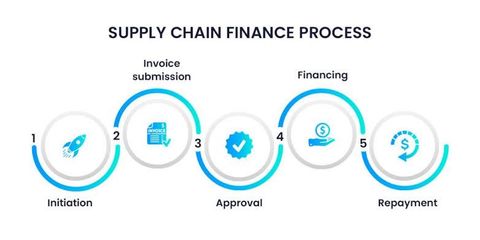
The process generally involves:
An eligible MSME supplier uploads an invoice or bill.
The buyer accepts the relevant receivable.
Financiers review the transaction and submit bids.
The supplier selects an available financing arrangement.
Funds are disbursed according to the platform's settlement process.
The buyer pays the financier on the due date.
TReDS can be particularly relevant for MSMEs supplying established corporate or government buyers.
It is important to understand that an invoice must meet the platform's eligibility and acceptance requirements. Registration alone does not guarantee financing for every invoice.
6. Bill Discounting
Bill discounting is a financing arrangement in which a business obtains funds against an eligible bill of exchange or other accepted trade instrument before its maturity.
The financier deducts the applicable discount or financing charge and provides the remaining amount to the business.
It is commonly associated with documented commercial transactions and can help businesses manage the gap between delivery and payment.
7. Supplier Credit and Trade Credit
Supplier credit allows an MSME to receive materials or goods and pay the supplier at a later agreed date.
For example, a manufacturer may receive raw materials with a 30-day payment period. If the manufacturer converts those materials into finished goods and collects customer payments within that period, the supplier credit can reduce immediate cash pressure.
Businesses should negotiate realistic payment periods and monitor outstanding obligations to avoid overdependence on supplier credit.
8. Business Credit Facilities
Some banks and financial institutions provide business credit facilities that can be used for eligible operating requirements.
These may include business credit cards, revolving credit arrangements and other short-term borrowing products.
Enterprises should compare interest rates, repayment periods, utilisation conditions and penalties. Short-term convenience should not become a reason to carry expensive revolving debt for extended periods.
Comparison of Working Capital Funding Options
| Funding Method | Main Purpose | Commonly Suitable For |
|---|---|---|
| Cash Credit | Recurring inventory and receivable finance | Manufacturers and distributors |
| Overdraft | Temporary liquidity requirements | Businesses with fluctuating cash flow |
| Working Capital Term Loan | Defined short-term funding requirement | Businesses with identifiable funding needs |
| Invoice Discounting | Early access to unpaid invoice value | Businesses with established customers |
| TReDS | Financing accepted trade receivables | Eligible MSME suppliers |
| Bill Discounting | Finance against eligible trade instruments | Businesses with documented trade transactions |
| Supplier Credit | Deferred payment for purchases | Manufacturers, wholesalers and retailers |
| Business Credit Facility | Short-term operating expenditure | Eligible small businesses |
No single option is suitable for every enterprise. A business should compare the total financing obligation, repayment source, documentation and operational flexibility before selecting a facility.
Government and Institutional Support for MSME Working Capital
India has several institutional arrangements designed to improve access to formal credit for eligible MSMEs.
Credit Guarantee Scheme Through CGTMSE
The Credit Guarantee Fund Trust for Micro and Small Enterprises (CGTMSE) supports eligible lending to micro and small enterprises by providing guarantee cover to participating lending institutions.
Important points include:
The guarantee helps eligible lenders manage part of the credit risk.
It can support qualifying credit facilities, including working capital finance.
The enterprise applies through a participating member lending institution.
The lender assesses the proposal and decides whether to sanction credit.
Guarantee coverage depends on the applicable scheme category and conditions.
CGTMSE does not directly provide a loan or grant to the business. The lender remains responsible for assessing the borrower and sanctioning the facility.
Businesses should review the current scheme guidelines and applicable guarantee fees before proceeding.
SIDBI Financing Support
The Small Industries Development Bank of India (SIDBI) plays an important role in the development and financing of MSMEs.
It provides various forms of financial support through direct and indirect lending channels, depending on the applicable programme and eligibility criteria.
MSMEs can review SIDBI's current financing arrangements and assess whether their business profile, financial requirements and activity meet the relevant conditions.
Priority Sector Lending
The Reserve Bank of India includes eligible micro and small enterprise lending within the priority sector lending framework.
This framework encourages banks to direct a prescribed portion of their lending towards eligible priority sectors. However, priority sector classification does not mean that every MSME applicant automatically receives credit approval.
Banks still assess repayment capacity, business activity, financial statements and other relevant factors.
Udyam Registration
Udyam Registration is the Government of India's formal registration system for MSMEs.
A valid Udyam Registration can be relevant when accessing certain government programmes, institutional credit arrangements and delayed-payment mechanisms.
Businesses should ensure that their enterprise details, activity classification and registration information are accurate and updated.
Cash Flow Management Strategies for MSMEs
Access to credit can help manage temporary financial pressure, but consistent cash-flow management is essential for long-term stability.
Prepare a Monthly Cash Flow Statement
Record expected cash receipts and payments for each month.
Include:
Customer collections
Supplier payments
Employee expenses
Rent and utility payments
Taxes and statutory obligations
Loan instalments and interest
Inventory purchases
Transportation and operating expenses
A monthly statement helps identify periods when cash outflows may exceed expected collections.
Use a Rolling Cash Flow Forecast
Instead of preparing a forecast only once a year, businesses can update their projections regularly.
A 13-week cash flow forecast is one practical method. It helps management monitor expected collections, payment commitments and possible funding gaps over the coming weeks.
Forecasts should be updated when major customer orders, supplier terms or collection dates change.
Improve Receivables Collection
Unpaid invoices can restrict working capital even when sales are growing.
Useful practices include:
Establishing clear payment terms
Checking customer creditworthiness
Sending invoices promptly
Monitoring overdue accounts
Following up before payment deadlines
Resolving invoice disputes quickly
Reviewing customer concentration
A business should also distinguish between invoices that are merely outstanding and receivables that may be difficult to collect.
Control Inventory Levels
Excess inventory can tie up funds that could otherwise support operating expenses.
Businesses can review product movement, seasonal demand, reorder levels and slow-moving stock.
Inventory planning should balance availability against the financial burden of holding unnecessary stock.
Negotiate Supplier Payment Terms
Businesses can discuss payment periods that align more closely with their sales and collection cycles.
However, supplier credit should be managed responsibly. Late payments may affect supply continuity, commercial relationships and future credit arrangements.
Separate Business and Personal Finances
Using separate accounts and maintaining clear financial records makes it easier to understand actual operating performance.
It also helps lenders assess business cash flow and distinguish company obligations from personal transactions.
How to Calculate Working Capital Requirements
Working capital requirements depend on the value and timing of current assets and current liabilities.
A basic accounting formula is:
Net Working Capital = Current Assets − Current Liabilities
Current assets may include cash, inventory, trade receivables and other short-term assets. Current liabilities may include supplier dues, short-term borrowings and other obligations due within the operating cycle.
Consider this illustrative example:
| Financial Item | Amount |
|---|---|
| Cash and bank balance | ₹5 lakh |
| Inventory | ₹12 lakh |
| Trade receivables | ₹18 lakh |
| Other current assets | ₹2 lakh |
| Total Current Assets | ₹37 lakh |
| Supplier payables | ₹10 lakh |
| Short-term obligations | ₹7 lakh |
| Other current liabilities | ₹3 lakh |
| Total Current Liabilities | ₹20 lakh |
| Net Working Capital | ₹17 lakh |
The enterprise has net working capital of ₹17 lakh based on these illustrative figures.
This accounting calculation is not the same as a bank's sanctioned working capital limit. A lender may apply its own assessment method, eligibility rules, drawing-power calculations and margin requirements.
Working Capital Assessment Based on Turnover
RBI guidance discusses the projected-turnover method for assessing working capital requirements for certain MSE borrowers. The traditional production or operating-cycle method may also be relevant.
The historical Nayak Committee-based approach is commonly described as a 25% working capital requirement against projected annual turnover, with 5% contributed by the borrower and bank finance of at least 20%, within the applicable framework and conditions.
This should not be treated as an automatic entitlement or a universal calculation for every MSME. Banks assess genuine funding needs, business cycles and applicable lending policies.
Eligibility and Documents Required for MSME Working Capital Finance
Eligibility depends on the lender, type of facility, business activity, credit profile and financial position of the applicant.
Common assessment factors include:
Business registration and Udyam details, where applicable
Nature and history of business operations
Annual turnover and revenue stability
Bank account activity
Profitability and repayment capacity
Existing borrowings and repayment history
Customer and supplier relationships
Inventory and receivables position
Business credit profile
Available collateral or applicable guarantee support
Commonly requested documents may include:
| Document | Purpose |
|---|---|
| PAN and identity documents | Applicant verification |
| Udyam Registration | MSME identification, where applicable |
| Business constitution documents | Verification of legal structure |
| GST returns | Review of reported business activity |
| Income tax returns | Financial and tax assessment |
| Audited financial statements | Review of financial position |
| Bank statements | Assessment of cash flow and transactions |
| Debtor and creditor statements | Review of receivables and payables |
| Stock statements | Assessment of inventory position |
| Existing loan details | Review of current repayment obligations |
| Purchase orders and invoices | Evidence of business transactions |
The lender may request additional records depending on the facility and the enterprise's activities.
Important RBI and Government Updates for MSME Finance in 2026
Recent regulatory and policy developments are relevant to businesses planning working capital arrangements.
RBI Collateral-Free Lending Amendment – February 2026
On 9 February 2026, the Reserve Bank of India issued the Lending to Micro, Small and Medium Enterprises (MSME) Sector (Amendment) Directions, 2026.
The amendment increased the mandatory collateral-free loan limit for eligible micro and small enterprise units from ₹10 lakh to ₹20 lakh. Banks may also increase the collateral-free limit up to ₹25 lakh for MSE units with a good track record and financial position, subject to their internal policies.
The revised provisions apply to loans sanctioned or renewed on or after 1 April 2026.
This is an important distinction: the mandatory collateral-free provision applies to eligible MSE loans within the specified limit. It does not mean every MSME loan is automatically approved without security. <Link ref="turn303329search0" title="RBI Amendment Directions, February 2026"/>
RBI TReDS Directions – June 2026
On 23 June 2026, RBI issued the Trade Receivables Discounting System Directions, 2026.
The revised framework includes changes to TReDS operations, simplification of MSME seller onboarding and provisions allowing financiers to avail credit guarantee cover for eligible exposures undertaken through TReDS.
These changes are relevant to businesses that supply goods or services to corporate and institutional buyers and want to understand invoice-based financing arrangements. <Link ref="turn303329search4" title="RBI TReDS Directions, 2026"/>
TReDS Requirement for Central Public Sector Enterprises – June 2026
A notification dated 30 June 2026 introduced mandatory routing through RBI-authorised TReDS platforms for settlement of invoices relating to goods and services procured by operating Central Public Sector Enterprises from MSMEs.
The development is relevant to eligible MSME suppliers working with CPSE buyers because accepted invoices may be financed through participating financiers before their due dates, subject to the applicable arrangements. <Link ref="turn303329search9" title="Ministry of MSME TReDS Notification Update"/>
Continued Support Through CGTMSE
CGTMSE remains an important credit guarantee mechanism for eligible micro and small enterprises. Its guarantee framework can support qualifying working capital and other credit facilities through participating lenders.
Coverage percentages, eligible credit limits, fees and borrower categories depend on the applicable scheme guidelines. Businesses should check the latest conditions before making financing decisions. <Link ref="turn303329search15" title="CGTMSE Credit Guarantee Scheme Guidelines"/>
Delayed Payments and MSME Financial Protection
Delayed customer payments are one of the major causes of working capital pressure for smaller enterprises.
The Micro, Small and Medium Enterprises Development (MSMED) Act, 2006 contains provisions governing payment obligations to micro and small enterprise suppliers.
Under Section 15, where a written agreement specifies a payment period, that period cannot exceed 45 days from the day of acceptance or deemed acceptance. Where there is no written agreement, the statutory period is 15 days.
Under Section 16, delayed payments may attract compound interest with monthly rests at three times the RBI bank rate, subject to the statutory provisions.
Eligible micro and small enterprises with valid Udyam Registration can use the MSME Samadhaan mechanism to submit delayed-payment references to the relevant Micro and Small Enterprises Facilitation Council.
The Samadhaan portal facilitates filing; the relevant council handles the matter under the applicable legal framework. <Link ref="turn303329search6" title="MSME Samadhaan Portal"/>
Common Working Capital Mistakes to Avoid
Using short-term finance for long-term assets: Working capital facilities should generally support operating requirements. Long-term machinery or infrastructure investments need a suitable funding structure.
Ignoring the actual cash conversion cycle: A business may underestimate its funding requirement if it does not account for inventory holding periods and customer payment delays.
Borrowing without a repayment plan: Every credit facility should have a realistic repayment source and an understanding of its interest and renewal conditions.
Overestimating customer collections: Forecasts based on invoice due dates alone may be unreliable when customers regularly pay late.
Holding excess inventory: Overstocking can restrict liquidity and increase storage, damage and obsolescence risks.
Mixing personal and business transactions: Poor financial separation can make cash-flow analysis and lender assessment more difficult.
Depending on one customer: High customer concentration can create serious cash-flow pressure if a major buyer delays payment or reduces orders.
Practical Financial Planning Checklist for MSMEs
Before applying for a working capital facility, an enterprise can review the following points:
Calculate the cash conversion cycle.
Prepare a monthly cash flow statement.
Identify the peak working capital requirement.
Review overdue customer invoices.
Evaluate inventory levels and slow-moving stock.
Compare cash credit, overdraft and invoice financing.
Review current borrowing and repayment obligations.
Update business registration and financial records.
Compare interest rates, fees and repayment conditions.
Maintain a contingency plan for delayed collections.
A regular review of these areas can help management identify financial pressure early and select funding arrangements that match the business cycle.
Tools and Resources for MSME Working Capital Planning
RBI: Review MSME lending directions, banking regulations and TReDS guidelines.
SIDBI: Explore institutional finance and MSME development programmes.
CGTMSE: Review credit guarantee eligibility and current scheme conditions.
Udyam Registration Portal: Maintain enterprise registration details and relevant MSME records.
MSME Samadhaan: Review the mechanism for eligible delayed-payment references.
GST Portal: Monitor tax filings and transaction records relevant to financial assessment.
Accounting Software: Use platforms such as TallyPrime, Zoho Books or other accounting systems to monitor receivables, payables and cash flow.
Cash Flow Forecasting Tools: Use spreadsheets or financial planning applications to estimate future cash requirements and payment commitments.
TReDS Platforms: Review RBI-authorised platforms for eligible invoice financing arrangements.
Businesses should verify platform authorisation, current eligibility, contractual conditions and financing charges before using any financial product.
Frequently Asked Questions
1. What is working capital finance for MSMEs?
Working capital finance is short-term funding used to manage routine business expenses, inventory purchases, supplier payments and other operating requirements. It helps bridge the gap between business expenditure and customer collections.
2. Which funding method is suitable for a small business?
The appropriate method depends on the business cycle. Cash credit may suit recurring inventory requirements, an overdraft may help with temporary liquidity needs, and invoice discounting or TReDS may be relevant for businesses with eligible unpaid invoices.
3. Can an MSME obtain working capital finance without collateral?
Eligible micro and small enterprise units are covered by RBI's collateral-free lending provisions for loans up to ₹20 lakh, applicable to loans sanctioned or renewed from 1 April 2026. Banks may extend the limit up to ₹25 lakh under their internal policies for eligible units with a good track record and financial position. Approval remains subject to lender assessment and applicable conditions.
4. What is TReDS and how does it help MSMEs?
TReDS is an RBI-regulated electronic platform that facilitates financing of eligible trade receivables owed to MSME suppliers by corporate and institutional buyers. It can help suppliers access funds against accepted invoices before the payment due date, subject to platform and financier requirements.
5. How can an MSME improve its cash flow?
An MSME can improve cash flow by collecting invoices on time, controlling inventory, planning supplier payments, preparing rolling cash-flow forecasts, monitoring operating expenses and selecting suitable working capital facilities.
Conclusion
Working capital is essential for maintaining stable MSME operations. It helps businesses manage inventory, supplier payments, employee expenses and customer collection delays without disrupting everyday activities.
Cash credit, overdrafts, invoice discounting, TReDS and supplier credit provide different ways to address short-term funding requirements. The right choice depends on the enterprise's operating cycle, financial records, credit profile and repayment capacity.
For Indian MSMEs, recent RBI amendments and developments in invoice financing provide important context when evaluating formal credit arrangements. However, sustainable financial planning also requires accurate cash-flow forecasting, disciplined receivables management and regular review of borrowing obligations.
A business that understands its cash conversion cycle and plans its funding requirements carefully is better positioned to manage liquidity, fulfil orders and support steady operations.

Related Post...

CRM Software for Business: Explore Customer Management, Automation and Sales Tools
Updated: November 06, 2026
Read More
Business Valuation Methods: Discover Company Worth, Assets and Financial Metrics
Updated: November 12, 2026
Read More
MSME Credit Assessment: Discover Credit Scores, Lending Criteria and Risk Factors
Updated: November 12, 2026
Read More