Business Exit Strategy Guide: Company Valuation, Ownership Transfer, Financial Planning, and Transition Insights
A business exit strategy is a structured plan for an owner or ownership group to transition away from a company while addressing financial, legal, operational, ownership, and management considerations.
An exit can take several forms, including transferring ownership to another individual, selling the company, transferring ownership within a family, transitioning management, or combining an exit with broader business restructuring.
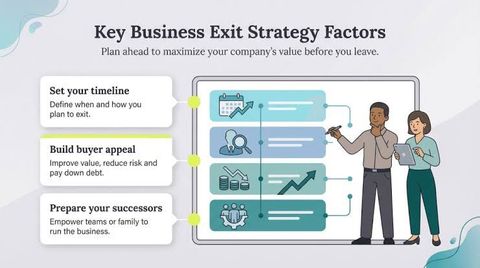
Effective exit planning generally begins well before the actual ownership transition. Early planning can provide more time to improve financial records, clarify ownership, address operational dependencies, evaluate company value, and prepare potential successors or transaction structures.
Why Business Exit Planning Matters
Leaving a business can involve more than transferring ownership.
An exit plan may address:
Company valuation
Ownership interests
Financial records
Tax considerations
Legal agreements
Business continuity
Management succession
Customer relationships
Employee considerations
Debt obligations
Intellectual property
Contracts
Transaction structure
Post-transition responsibilities
A structured approach can help an owner understand the financial and operational implications of different exit scenarios before making major decisions.
Common Business Exit Strategies
Business owners can consider several potential transition approaches.
Sale to Another Party
An owner may transfer the business to an external purchaser.
Planning may include:
Business valuation
Buyer qualification
Due diligence
Financing
Purchase agreements
Closing requirements
Transition arrangements
Management or Employee Transition
Ownership may be transferred to existing management or employees through an appropriate transaction structure.
This approach can require careful consideration of financing, leadership capabilities, ownership rights, and ongoing business operations.
Family Business Transfer
A family-owned business may transition to the next generation or another family member.
Important considerations can include:
Ownership interests
Leadership responsibilities
Valuation
Estate planning
Tax considerations
Governance
Family relationships
Management development
Partner or Co-Owner Transition
In a partnership or closely held company, one owner may transfer an interest to another owner.
Existing partnership agreements, operating agreements, shareholder agreements, and buy-sell provisions may influence the available options.
Gradual Management Transition
An owner may reduce day-to-day involvement over time while transferring responsibilities to a management team.
This can provide additional time to establish management continuity and document important operational knowledge.
Company Valuation
Business valuation is an important part of exit planning.
An owner may need to understand the company's value for:
Transaction planning
Ownership transfers
Financing
Estate planning
Internal ownership arrangements
Tax planning
Negotiation
Financial planning
Common valuation approaches include income-based, market-based, and asset-based methods.
Income-Based Valuation
Income-based methods examine the economic benefits generated by a company.
Analysis can include:
Historical earnings
Cash flow
Normalized earnings
Growth expectations
Business risk
Owner compensation
Recurring revenue
Capital requirements
Adjustments may be necessary when financial statements contain unusual or non-recurring items.
Market-Based Valuation
Market-based approaches examine comparable businesses or relevant transactions.
Potential comparison factors include:
Industry
Revenue
Earnings
Company size
Growth
Geographic market
Customer concentration
Business model
Comparable businesses are not always directly equivalent, so market evidence should be interpreted carefully.
Asset-Based Valuation
An asset-based approach focuses on company assets and liabilities.
Relevant assets can include:
Equipment
Inventory
Accounts receivable
Real estate
Intellectual property
Cash
Other identifiable business assets
This approach may be particularly relevant for businesses with substantial tangible assets.
Preparing Financial Records
Strong financial records can help support valuation and transaction planning.
Owners may organize:
Income statements
Balance sheets
Cash-flow statements
Tax returns
Bank records
Accounts receivable
Accounts payable
Payroll records
Debt schedules
Capital expenditures
Asset records
Historical financial information can help prospective parties understand the company's performance and underlying economics.
Improving Business Transfer Readiness
Exit planning can identify areas that may make a company easier to transition.
Potential areas include:
Documented operating procedures
Diversified customer relationships
Stable supplier arrangements
Reliable financial reporting
Management depth
Clear ownership records
Transferable contracts
Organized intellectual-property records
Appropriate technology systems
Business continuity procedures
Reducing excessive dependence on the current owner can also support transition planning.
Legal and Contract Review
Business ownership changes can affect existing agreements.
Important documents may include:
Articles of incorporation
Operating agreements
Partnership agreements
Shareholder agreements
Buy-sell agreements
Customer contracts
Supplier agreements
Lease agreements
Loan documents
Employment agreements
Intellectual-property agreements
Some agreements may contain transfer restrictions, change-of-control provisions, consent requirements, or termination rights.
Tax Planning Considerations
The tax implications of an exit depend on the transaction structure, ownership interests, entity type, assets involved, and applicable jurisdiction.
Potential considerations include:
Capital gains
Ordinary income
Asset transfers
Ownership transfers
Depreciation recapture
State taxes
Estate and gift taxes
Installment arrangements
Transaction expenses
The tax treatment of an asset transaction can differ from that of an ownership-interest transaction, making advance planning important.
Ownership Transfer Planning
Ownership transfer should be documented carefully.
Planning may address:
Ownership percentage
Purchase consideration
Transfer date
Voting rights
Management authority
Payment arrangements
Closing conditions
Representations and warranties
Post-closing responsibilities
For closely held companies, existing governance documents may establish specific procedures for transferring ownership interests.
Financing an Exit Transaction
The structure of an exit can depend partly on how the transaction is financed.
Potential structures may include:
Buyer financing
Seller financing
Bank financing
Investor capital
Combination financing
Installment arrangements
An owner should consider how financing affects the timing and certainty of proceeds, as well as any continuing obligations after the transition.
Business Continuity During Transition
A successful ownership transition should protect critical business operations.
Continuity planning can address:
Customer relationships
Supplier relationships
Key employees
Financial systems
Banking arrangements
Technology access
Intellectual property
Licenses and permits
Operational procedures
Emergency responsibilities
A transition plan should identify who is responsible for important functions before, during, and after the ownership change.
Management and Leadership Transition
An exit can create uncertainty when the existing owner performs many important functions.
Planning can identify:
Key management responsibilities
Customer relationships
Supplier relationships
Financial authority
Operational knowledge
Technology knowledge
Decision-making responsibilities
Documenting important processes and gradually transferring responsibilities can reduce transition risks.
Exit Due Diligence
Potential purchasers or successors may conduct due diligence before completing a transaction.
They may review:
Financial statements
Tax records
Contracts
Debt
Litigation
Employees
Customers
Suppliers
Assets
Intellectual property
Technology
Regulatory compliance
Insurance
Owners can prepare for this process by organizing relevant documentation before negotiations become advanced.
Letter of Intent and Transaction Planning
A letter of intent can establish a framework for potential transaction negotiations.
It may address:
Proposed transaction value
Transaction structure
Financing assumptions
Due-diligence period
Confidentiality
Exclusivity
Expected closing date
Transition arrangements
The legal effect of an LOI can vary according to its language and applicable law.
Post-Exit Transition
The owner's responsibilities may not necessarily end on the closing date.
Depending on the transaction, post-closing arrangements can involve:
Transition assistance
Consulting arrangements
Customer introductions
Management handover
Knowledge transfer
Contract transition
Financial reconciliation
Ongoing payment arrangements
The specific obligations should be documented in the applicable transaction agreements.
Recent Developments
Business exit planning increasingly incorporates:
Digital financial records
Remote and hybrid operations
Cybersecurity due diligence
Customer-data privacy
Recurring-revenue analysis
Technology dependency reviews
Management succession
Business continuity planning
Supply-chain resilience
Data and intellectual-property protection
Technology can make financial and operational due diligence more efficient, but important conclusions should still be verified against underlying records and professional analysis.
Business Exit Planning Checklist
Owners preparing for a potential exit can review:
Define the preferred exit objective
Review ownership documents
Organize financial statements
Review tax records
Obtain an appropriate valuation analysis
Identify key contracts
Review debt obligations
Evaluate customer concentration
Assess management dependencies
Document important operating procedures
Review intellectual-property records
Assess technology dependencies
Review insurance and regulatory matters
Consider potential transaction structures
Evaluate financing requirements
Prepare for due diligence
Develop a transition plan
Tools and Resources
Useful resources for business exit planning include:
Financial statements
Business valuation models
Tax records
Corporate records
Ownership agreements
Buy-sell agreements
Contract-management systems
Asset schedules
Debt schedules
Customer and supplier records
Business continuity plans
Risk registers
Financial forecasting models
Transaction data rooms
Legal and tax review documents
Frequently Asked Questions
What is a business exit strategy?
A business exit strategy is a plan for transitioning an owner away from a company through a sale, ownership transfer, succession arrangement, management transition, or another structured approach.
When should a business owner begin exit planning?
There is no universal timeline, but earlier planning generally provides more time to organize financial records, strengthen management continuity, review agreements, evaluate valuation, and prepare for a potential transition.
How is a business valued for an exit?
Common approaches include income-based, market-based, and asset-based valuation methods. The appropriate approach depends on the business, available information, transaction purpose, and other circumstances.
Can ownership be transferred to a family member or existing management team?
Yes, depending on the business structure, governing documents, financing arrangements, applicable laws, and transaction terms. Family and management transfers should be evaluated carefully for financial, tax, legal, and governance implications.
What documents are important for business exit planning?
Common documents include financial statements, tax records, ownership agreements, contracts, debt records, intellectual-property documents, employee records, licenses, permits, and relevant insurance documentation.
Conclusion
A business exit strategy connects company valuation, financial preparation, ownership transfer, transaction structure, legal review, tax considerations, and operational transition.
A structured plan can help an owner understand the company's financial position, identify potential transition risks, prepare important records, and evaluate different ownership or transaction pathways.
Because exit transactions can have significant financial, legal, tax, and operational consequences, owners should base decisions on current information and appropriately qualified professional guidance.

Related Post...