Living Trust Guide: Estate Documents, Asset Management, Beneficiary Planning, and Practical Tips
A living trust is an estate-planning arrangement created during an individual's lifetime to hold and manage certain assets according to the terms of a trust document.
A commonly used structure is a revocable living trust, which generally allows the person who creates the trust to retain substantial control during their lifetime and make changes according to the trust terms and applicable law.
Living trusts can involve several different roles, including the grantor or settlor, trustee, successor trustee, and beneficiaries.
A trust is only one component of an estate plan. Wills, beneficiary designations, powers of attorney, healthcare documents, property records, and other planning documents may also be relevant.
What Is a Living Trust?
A living trust is generally established while the person creating it is alive.
The person creating the trust is commonly called the grantor, settlor, or trustor.
The trustee manages assets held by the trust according to its terms.
A typical revocable living trust may involve:
Grantor or settlor
Initial trustee
Successor trustee
Current beneficiaries
Remainder beneficiaries
Trust property
Written trust agreement
The exact terminology and legal effects can vary by jurisdiction.
Revocable vs. Irrevocable Trusts
One of the most important distinctions is between revocable and irrevocable trusts.
Revocable trust
A revocable trust can generally be changed or revoked by the person who established it, subject to the trust agreement and applicable law.
It is commonly used for:
Asset management
Incapacity planning
Beneficiary planning
Probate-related planning
Organization of estate documents
Irrevocable trust
An irrevocable trust generally involves more limited rights to change or revoke the arrangement.
Depending on its structure, an irrevocable trust may have different tax, asset-protection, estate-planning, and beneficiary consequences.
Because the legal and tax consequences can be significant, the type of trust should be selected according to the individual's objectives and circumstances.
Grantor, Trustee, and Beneficiary Roles
Understanding the different trust roles is essential.
Grantor
The grantor creates the trust and establishes its terms.
Trustee
The trustee manages trust property according to the trust agreement and applicable fiduciary requirements.
Successor Trustee
A successor trustee can take over management when the original trustee can no longer serve or when the trust terms otherwise require a transition.
Beneficiaries
Beneficiaries are the individuals or organizations entitled to receive benefits from the trust according to its terms.
The same person can sometimes serve in multiple roles during their lifetime.
Funding a Living Trust
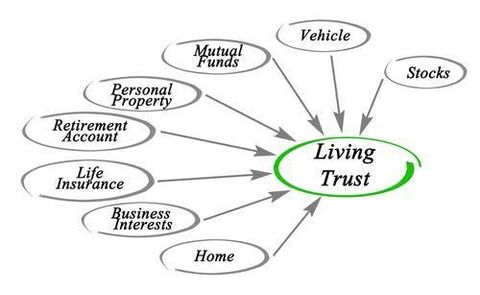
Creating a trust document does not necessarily mean every asset is automatically owned by the trust.
Assets generally need to be properly titled, assigned, or otherwise coordinated with the trust according to the nature of the asset and applicable law.
Potential trust assets can include:
Real estate
Bank accounts
Investment accounts
Business interests
Personal property
Certain contractual interests
Some assets may instead be handled through beneficiary designations or other ownership arrangements.
Proper coordination between the trust document and individual asset records is therefore important.
Living Trusts and Probate
One commonly discussed purpose of a living trust is probate planning.
Assets properly held by a trust may generally be administered according to the trust terms rather than passing through the same probate process that applies to certain individually owned assets.
However, not every asset necessarily belongs in a trust.
Assets can also transfer through:
Beneficiary designations
Joint ownership
Transfer-on-death arrangements
Payable-on-death arrangements
Other legal mechanisms
The probate implications depend on asset ownership, state law, the trust structure, and other circumstances.
Living Trusts and Incapacity Planning
A living trust can also provide a framework for managing certain assets if the person who created the trust becomes unable to manage them.
If a successor trustee is authorized to act under the trust terms, that individual may be able to manage trust property without requiring the same court process that might otherwise be necessary for certain individually owned assets.
However, a trust does not replace every incapacity-planning document.
A broader estate plan may also include:
Durable financial power of attorney
Healthcare directive
Healthcare power of attorney
HIPAA-related authorization where applicable
Guardianship-related documents
Emergency contact information
Beneficiary Planning
Beneficiary planning involves determining who should receive assets and under what circumstances.
Trust documents can establish arrangements involving:
Spouses
Children
Grandchildren
Other relatives
Charitable organizations
Special-needs beneficiaries
Minor beneficiaries
A trust may also establish conditions concerning when and how beneficiaries receive assets.
For example, distributions may be structured around ages, educational expenses, health needs, or other requirements described in the trust.
The enforceability and tax consequences of specific provisions depend on the trust language and applicable law.
Trusts for Minor Beneficiaries
Directly transferring significant assets to a minor can create additional legal and administrative considerations.
A trust can provide a framework for managing assets for a child while establishing rules for distributions and management.
Planning considerations may include:
Trustee selection
Distribution standards
Educational expenses
Healthcare expenses
Age-based distributions
Financial supervision
Successor trustee provisions
Parents and other family members should obtain qualified legal guidance when creating arrangements for minors.
Trustee Responsibilities
Trustees can have significant responsibilities.
Depending on the trust and jurisdiction, duties may include:
Managing trust assets
Following the trust agreement
Maintaining records
Communicating with beneficiaries
Handling distributions
Filing applicable tax documents
Protecting trust property
Managing investments
Maintaining appropriate documentation
Acting according to applicable fiduciary duties
Trustees should understand the terms of the trust before making significant decisions involving trust assets.
Trust Asset Management
Trust asset management can involve financial, property, tax, and administrative considerations.
A trustee may need to monitor:
Bank accounts
Investment accounts
Real estate
Business interests
Insurance-related assets
Taxes
Property expenses
Income
Distributions
Required documentation
Investment decisions should be consistent with the trust terms and applicable fiduciary standards.
Living Trusts and Taxes
A living trust does not automatically eliminate taxes.
The tax treatment depends on the trust's structure, ownership, assets, beneficiaries, transfers, and applicable federal and state rules.
A revocable living trust is often treated differently for federal income-tax purposes from certain irrevocable trust structures.
Potential tax considerations can include:
Income tax
Estate tax
Gift tax
Capital gains
Property taxes
State-level taxes
Tax treatment can change when assets move into different trust structures or when the trust becomes irrevocable.
Real Estate and Living Trusts
Real estate can be a significant part of a living trust.
Potential considerations include:
Property title
Mortgage requirements
Property taxes
Insurance
Rental income
State-specific rules
Homestead protections
Transfer requirements
Transferring real estate to a trust can require properly prepared and recorded documents.
Homeowners should also review mortgage, insurance, tax, and local recording considerations before changing property ownership.
Business Interests and Living Trusts
Business owners may consider whether certain business interests should be coordinated with an estate plan.
Potential considerations include:
Ownership records
Operating agreements
Shareholder agreements
Partnership agreements
Buy-sell arrangements
Voting rights
Successor management
Business valuation
Transfer restrictions
The governing documents of the business should be reviewed alongside the trust because a trust transfer may be restricted or require additional documentation.
Living Trust vs. Will
A living trust and a will serve different functions.
| Consideration | Living Trust | Will |
|---|---|---|
| Created during lifetime | Yes | Yes |
| Can hold assets during lifetime | Yes | No |
| Provides trust-management instructions | Yes | No |
| Can name beneficiaries | Yes | Yes |
| Can address certain assets outside the trust | Depends on structure | Yes |
| Probate implications | May reduce probate for properly funded assets | Generally subject to probate for covered assets |
| Incapacity planning | Can provide a management framework | Generally does not manage assets during lifetime incapacity |
Many estate plans use both a trust and a will rather than treating them as mutually exclusive documents.
Pour-Over Wills
A pour-over will can be used alongside a revocable living trust.
It generally directs certain assets that remain outside the trust at death to be transferred into the trust through the applicable estate-administration process.
This can provide an additional layer of coordination, but it does not necessarily prevent probate for assets that were not properly transferred to the trust during the individual's lifetime.
Practical Living Trust Checklist
Before creating or reviewing a living trust, consider:
Identify the grantor
Identify initial and successor trustees
Identify beneficiaries
Inventory major assets
Determine which assets should be coordinated with the trust
Review property titles
Review beneficiary designations
Review business ownership documents
Coordinate a pour-over will if appropriate
Consider incapacity documents
Review tax considerations
Establish appropriate recordkeeping
Review trustee responsibilities
Revisit the plan after major life changes
Review the trust under current state law
Common Living Trust Mistakes
Several administrative issues can reduce the effectiveness of an estate plan.
Potential problems include:
Creating a trust but failing to properly fund it
Forgetting to update beneficiary designations
Failing to update asset ownership records
Naming an inappropriate successor trustee
Ignoring business transfer restrictions
Overlooking real-estate documentation
Using outdated trust documents
Failing to coordinate a will with the trust
Not maintaining an updated asset inventory
Estate plans should be reviewed when major family, financial, property, or legal circumstances change.
Tools and Resources
Useful resources for living-trust planning include:
Trust agreements
Wills and estate documents
Property deeds
Financial-account records
Retirement-account statements
Life insurance records
Business ownership documents
Beneficiary-designation forms
Estate inventories
State court and probate resources
State tax authority guidance
Qualified estate-planning attorneys
Tax professionals
Financial and trust-administration professionals
Frequently Asked Questions
1. What is a living trust?
A living trust is a trust created during a person's lifetime to hold and manage assets according to written trust terms. A common type is a revocable living trust.
2. Does a living trust avoid probate?
Assets properly transferred to a trust may generally avoid the probate process applicable to certain individually owned assets. However, assets outside the trust can still be subject to probate depending on ownership and state law.
3. Does a living trust replace a will?
Not necessarily. A living trust and will serve different purposes, and many estate plans use both. A pour-over will may also coordinate with a revocable living trust.
4. Who manages a living trust?
The trustee manages trust property according to the trust document and applicable fiduciary requirements. The person creating the trust may initially serve as trustee in some arrangements.
5. Can a living trust be changed?
A revocable living trust can generally be changed or revoked by the person who established it, subject to the trust document and applicable law. Irrevocable trusts generally have more limited modification options.
Conclusion
A living trust can provide a framework for managing assets, coordinating beneficiary arrangements, and planning for certain lifetime and post-death circumstances.
Its effectiveness depends on more than the trust document itself. Asset ownership, beneficiary designations, trustee selection, wills, property records, business documents, tax considerations, and state law can all affect the overall estate plan.
Because trust and estate rules vary by jurisdiction and individual circumstances, significant estate-planning decisions should be based on current legal and tax guidance and appropriately qualified professional advice.

Related Post...
Estate Tax Planning Guide: Tax Rules, Asset Strategies, Family Planning, and Legal Insights
Updated: September 28, 2026
Read More
Child Custody Guide: Legal Processes, Parenting Plans, Court Information, and Practical Tips
Updated: September 24, 2026
Read More
Custody Planning Guide: Parenting Arrangements, Legal Processes, Court Information, and Useful Insights
Updated: September 28, 2026
Read More